
 UAE
UAE  Saudi Arabia
  USA
USA Is a Wet and Dry Vacuum Worth It at Home?
We may earn a commission from purchases through our links, at no extra cost to you. How we choose · Disclosure.
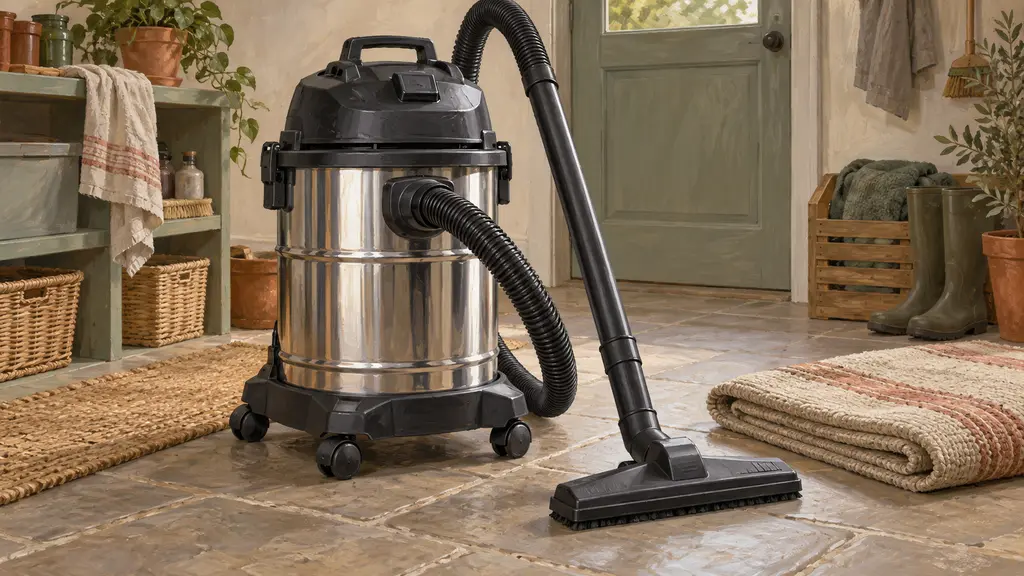
Is a wet and dry vacuum worth paying extra for? For most regular homes, the answer is no. A strong regular vacuum plus a mop covers daily cleaning at a lower price and a smaller storage footprint. A wet and dry vacuum earns its keep only in specific situations: a workshop, a garage, or frequent water spills beyond what regular mopping can handle. Here’s the practical difference.
The quick answer
Most homes don’t need a wet and dry vacuum, since a regular vacuum plus a mop does the same daily cleaning job at a lower price and a smaller footprint. It’s worth it only if you have a workshop, garage, or large, frequent water spills, because it’s built for liquids and heavy debris, not everyday home cleaning.
Key takeaways
- A wet and dry vacuum is designed mainly for workshops and light industrial use, sucking liquids and heavy debris into one rugged tank.
- Its fine-particle filtration is usually weaker than a home vacuum, since its design focus is on liquids and large debris, not fine dust (general vacuum cleaner background from Britannica).
- A regular vacuum plus a mop is cheaper, lighter, and better suited to daily cleaning in most Egyptian homes.
- A wet and dry vacuum is heavier, bulkier, and louder, a real factor if storage space is limited.
- The real need for one comes from the nature of the space, a workshop, garage, or a kitchen with frequent water spills, not regular daily cleaning.
How is a wet and dry vacuum built?
A wet and dry vacuum (also known as a shop vac) uses a larger tank and a motor designed to safely suck up liquids directly without damage, a fundamental difference from a regular home vacuum, which isn’t built to handle water at all. This category was designed mainly for workshops and construction sites, to clean up heavy debris and spilled liquids like wet sawdust or leaked water.
Because of this design, it wins at handling heavy-duty use, but it loses on other points that matter for daily home cleaning.
What do you give up in return?
Here’s the point many people miss: fine-particle filtration. A wet and dry vacuum is built mainly to handle liquids and heavy debris, so most models lack the genuine HEPA filter that traps fine dust and pollen the way a dedicated home vacuum does (general vacuum cleaner background). That means if allergies matter at home or you want precise daily cleaning of carpets and upholstery, it isn’t the ideal choice.
It’s also much heavier and bulkier than a regular home vacuum, and louder when running, both real practical costs in maneuverability and storage space.
The real comparison: a regular vacuum plus a mop
For most homes, the fair comparison isn’t “wet and dry vacuum vs regular vacuum,” it’s “wet and dry vacuum vs a strong regular vacuum plus a mop.” A regular vacuum with a genuine HEPA filter efficiently removes dust and hair from carpets and floors, and a regular mop or microfiber handles any simple water spill or routine hard-floor cleaning. Together, these two steps cover a home’s daily needs at a lower total cost than a specialized wet and dry vacuum, and with a much smaller storage footprint.
Who wins at what?
| Criterion | Wet and dry vacuum | Regular vacuum + mop |
|---|---|---|
| Sucking up liquids and large spills | Strongest, best suited | Needs two separate steps |
| Fine dust filtration | Usually weaker | Stronger with a genuine HEPA filter |
| Total price | Higher for one specialized unit | Lower to cover the same needs |
| Size and weight | Bigger, heavier, harder to store | Lighter, easier to store |
| Noise level | Usually louder | Usually quieter |
| Best for | Workshops, garages, frequent spills | Everyday home cleaning |
Who should actually buy a wet and dry vacuum?
Worth it if you:
- Have a workshop, garage, or work space with debris and liquids on a regular basis.
- Deal with large water spills or leaks frequently, not just the occasional accident.
- Want one powerful unit for light industrial cleaning, not everyday home cleaning.
Not worth it if you:
- Mainly clean carpet, floors, and upholstery in a regular home.
- Have limited storage space and want something light and easy to maneuver.
- Rarely deal with water spills, and a regular mop or towel handles them fine.
A practical example of a home vacuum that covers most homes’ needs: the Philips PowerPro Compact FC9350 at 1800W with a HEPA H13 filter, efficiently removing dust and hair with a compact size that’s easy to store. We didn’t pick it as a substitute for a workshop wet and dry vacuum, we picked it because it covers real daily cleaning for most homes at a better price and footprint, which is why it tops our guide to the best vacuum cleaner in Egypt. If you specifically have thick carpet, also see our best vacuum for carpet guide. You’ll find its current price and the Noon link in the card below.
Bottom line
A wet and dry vacuum is a specialized tool for workshops, garages, and frequent spills, not a substitute for a regular home vacuum used for daily cleaning. For most Egyptian homes, a strong regular vacuum with a genuine HEPA filter plus a normal mop covers every need at a better price and a smaller storage footprint. If you’re weighing other vacuum types, see our corded vs cordless vacuum comparison, and remember that the wattage number isn’t the same as real suction, as we explain in watts vs suction. For the full step-by-step pick, head back to our guide on how to choose a vacuum or browse our vacuum cleaners hub.
Sources
- Britannica, “Vacuum cleaner”, general background on home vacuum cleaners and their filtration systems: https://www.britannica.com/technology/vacuum-cleaner
- US EPA, “What is a HEPA filter”, definition of the HEPA filter and its efficiency at trapping fine particles in home vacuums: https://www.epa.gov/indoor-air-quality-iaq/what-hepa-filter
This analysis is based on published information from Britannica (Vacuum cleaner), US EPA (What is a HEPA filter).
Frequently asked questions
Is a wet and dry vacuum worth it for a regular home?
Usually not for most homes. A strong regular vacuum plus a normal mop covers daily cleaning needs at a lower price and a smaller storage footprint. A wet and dry vacuum is worth it if you have a workshop, garage, or frequent water spills, not everyday cleaning.
Is a wet and dry vacuum stronger on dust than a regular vacuum?
Not necessarily. Most wet and dry vacuums are designed mainly for heavy debris and liquids, and their fine-particle filtration is often weaker than a home vacuum with a genuine HEPA filter. You may gain on liquids and large debris while losing on fine dust filtration.
What's the practical difference between a wet and dry vacuum and a regular vacuum plus a mop?
A wet and dry vacuum sucks liquid straight into one tank, useful for large spills or small floods. A regular vacuum plus a mop takes two separate steps, but it's cheaper, lighter, and better suited to daily cleaning and routine floor mopping.
Are wet and dry vacuums louder and bigger?
Usually yes. Wet and dry vacuums are built with a larger motor and tank to handle liquids and heavy debris, making them heavier, harder to maneuver, and louder than a regular home vacuum, which matters if your storage space is limited.