
 UAE
UAE  Saudi Arabia
  USA
USA Baby Monitor Not Working, What to Check
We may earn a commission from purchases through our links, at no extra cost to you. How we choose · Disclosure.
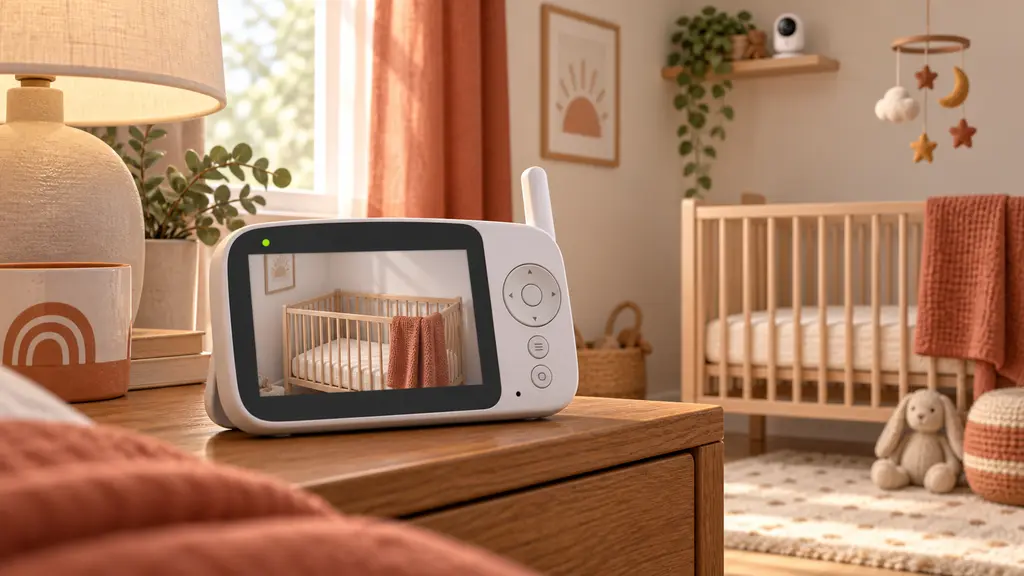
A baby monitor that keeps dropping the connection or won’t turn on at all doesn’t always mean it’s broken. The most common causes are a weak or poorly charged battery, a real barrier between the two units (a wall, a door, a floor) weakening the signal, or the unit simply needing a basic reset. Before you consider replacing it entirely, try these steps in order.
The quick answer
If your baby monitor keeps dropping the connection or won’t turn on, start with the battery and charging, then the range and any barriers between the units, then a full reset. Most cases resolve with one of these three without needing a replacement, and a replacement battery on its own solves a large share of “won’t charge” or “keeps shutting off” issues.
Key points
- The battery is the most common cause of units that “won’t turn on” or “shut off quickly”, especially after months of daily use.
- Real barriers (a wall, a door, a floor) affect the signal more than the distance in meters, even when the two units look “close” on paper.
- A reset resolves a lot of issues before you assume there’s an actual fault.
- A replacement battery is a cheap, practical fix once diagnosis confirms the battery is the cause, instead of buying an entirely new unit.
- The warranty on the Amazon.eg listing matters once diagnosis confirms a real fault, not just the battery or signal.
Step one: battery and charging
Before anything else, confirm the unit is actually plugged into the charger and that the cable itself is intact. Cheap or older charging cables wear out without you noticing, so try a different cable and charger if you have them. If the screen stays completely black even when plugged directly into power with no battery, the problem runs deeper than charging. If the unit works but the battery only lasts a short time compared to when you first bought it, that’s a clear sign the battery itself has weakened over time, which is normal after months of daily use.
Step two: range, barriers, and interference
A baby monitor works over a wireless signal between two units, and signals like this weaken significantly behind a solid wall, a closed door, or a different floor in the apartment, even when the distance in meters looks short on paper. Try moving the receiving unit a little closer to the baby’s room, and move it away from other devices running on the same frequency, like the router or a microwave, and see if the problem improves.
Step three: reset and re-pairing
If the battery and range aren’t the cause, turn off both units completely, wait half a minute, and turn them back on in the order listed in the manual. If the problem continues, try re-pairing the two units from scratch following the manufacturer’s instructions, since some units lose their pairing after a power outage or a fully drained battery.
Quick diagnosis table
| Symptom | Likely cause | What to try |
|---|---|---|
| Won’t turn on at all | Dead battery or a damaged cable | Try a different cable and charger, confirm direct power |
| Shuts off quickly on its own | The battery has worn down over time | A replacement battery if this keeps happening |
| Picture or sound keeps cutting out | A real barrier or interference from another device | Move the unit closer, away from the router and microwave |
| Won’t connect to the other unit at all | Lost pairing | Full reset and re-pairing per the manual |
| Everything above tried and it’s still not working | An actual hardware fault | Check the warranty on the Amazon.eg listing |
If diagnosis confirms the battery is the cause
If you’ve tried a different cable and confirmed the issue is the battery itself weakening over time, a replacement battery suited to your model is a practical fix, and far cheaper than replacing the entire unit, and it typically restores normal runtime. If you’ve tried all of these steps and the problem is still there, check the warranty on the Amazon.eg listing before considering a replacement, and our guide to the best baby monitor in Egypt recommends alternative models if it’s genuinely time to switch.
When to stop and call a technician
- The monitor still will not turn on after trying a known-good cable and charger.
- It keeps shutting off quickly after the battery and charging checks.
- Picture or sound still cuts out when the units are close together and away from interference.
- The units will not reconnect after a full reset and re-pairing.
Stop using the monitor and have it checked by a qualified technician before using it again.
Bottom line
Before assuming a baby monitor is completely broken, work through this order: battery and charging, then range and barriers, then reset and re-pairing. Most cases resolve in the first two steps at no cost, and a replacement battery covers most of the rest. If you’re still deciding whether a monitor is worth buying in the first place, read is a baby monitor worth it?. And if you’re setting up your baby-care routine more broadly, the best bottle sterilizer in Egypt is a practical starting point for the rest of your baby appliances. For the full buying criteria too, read how to choose baby appliances, or browse our baby appliances section.
Sources
- The consensus of buyer reviews and range/battery data from baby monitor product listings on Amazon.eg at the time of publication.
This analysis is based on published information from Amazon.eg.
Frequently asked questions
My baby monitor keeps dropping the connection, why?
Usually a real barrier (a solid wall, a closed door, a different floor) between the two units, or interference from another device running on the same frequency, like the router or a microwave. Try moving the receiving unit a bit closer or further from other devices before assuming the monitor itself is faulty.
My baby monitor won't turn on at all, what should I do?
Before anything else, confirm the battery is actually charged, and try a different charger or cable if you have one, since charging cables wear out without you noticing. If the screen stays completely black even while plugged directly into power, that's a sign the problem runs deeper than the battery.
How do I reset the monitor?
Turn off both units (the one in the baby's room and the one with you) completely, wait 30 seconds, and turn them back on in the order listed in the manual. If the problem continues, try re-pairing the two units from scratch following the manufacturer's instructions.
The battery only lasts a short time even after charging, is that normal?
Device batteries wear down over time with continuous daily charging and discharging, and that's normal after months of use. If the runtime is noticeably shorter than when you first bought the unit, a replacement battery can fix the problem without replacing the entire device.
When should I assume the problem is actually the unit itself, not a quick fix?
If you've tried a different cable and charger, done a reset and re-pairing, and moved the units close together without barriers, and the problem is still there, that's a sign of an actual hardware fault. Check the warranty on the Amazon.eg listing before considering a replacement.