
 UAE
UAE  Saudi Arabia
  USA
USA How to Clean a Bottle Sterilizer and Stop Limescale
We may earn a commission from purchases through our links, at no extra cost to you. How we choose · Disclosure.
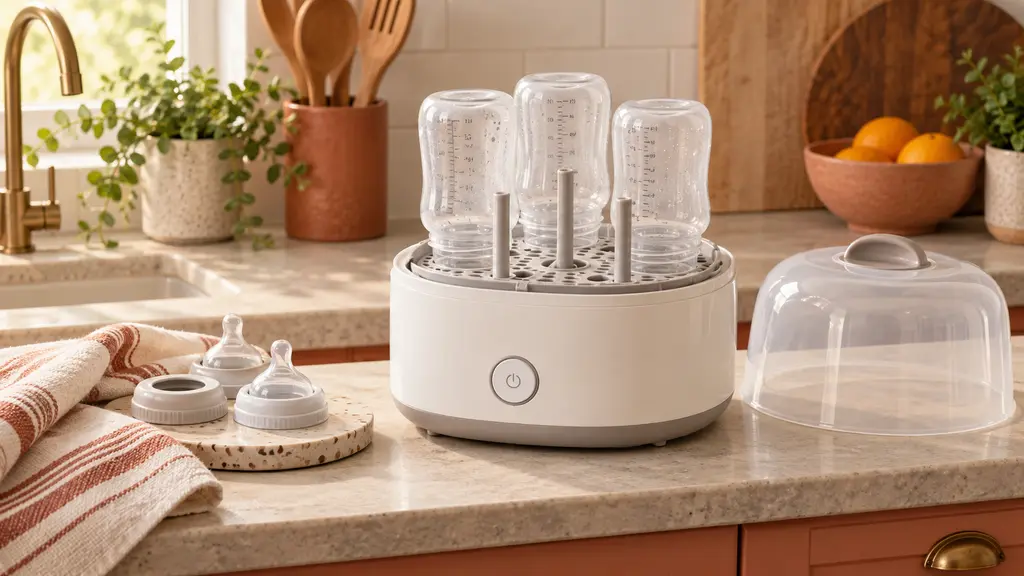
Quick answer: wipe the body of the bottle sterilizer with a damp cloth after every use and let it air-dry, and every two to four weeks add diluted white vinegar or citric acid with water to the base and let it sit before rinsing. That stops limescale from building up, which is what causes odors and weakens sterilizing performance over time.
Never mix vinegar with bleach or any chlorine-based cleaner - the combination releases toxic gases. Use one cleaner at a time and rinse thoroughly between products.
The quick answer
The white limescale deposits inside a bottle sterilizer come from minerals in tap water, not a flaw in the unit. A quick wipe after every use prevents odor buildup, and a deep clean with vinegar or citric acid every two to four weeks breaks down limescale before it builds up and affects performance. Never use steel wool or abrasives on any plastic or sensitive metal part.
Key points
- Limescale is natural mineral residue from tap water that settles in any appliance that regularly heats water (limescale background from USGS).
- Wiping after every use is the most important daily step to prevent water residue and odor buildup.
- Diluted white vinegar or citric acid is enough to remove limescale, no need for harsh chemicals.
- Your water hardness determines your deep-clean frequency, roughly every two to four weeks depending on your area.
- Check your model’s manufacturer instructions before any commercial cleaning product, to make sure it suits your unit’s exact parts.
Why does the sterilizer scale up in the first place?
Tap water contains dissolved minerals, mainly calcium and magnesium, and every time that water heats up and evaporates (as it does inside any steam sterilizer), those minerals settle out and leave a hard white layer on the base and interior walls. This happens in any home appliance that regularly heats hard water, a kettle, a water heater, and a bottle sterilizer is no exception. Nothing is wrong with the unit, limescale is simply a natural result of your water’s mineral content (hard water background from USGS). The issue is that built-up limescale reduces heat transfer efficiency over time and can leave an odd smell in bottles.
Daily cleaning after every use
The daily routine is simple and takes only a moment:
- Unplug the unit or let it cool if it’s microwave-based, wait until it’s cool before touching it.
- Empty out any leftover water from the base after every cycle, don’t leave it sitting.
- Wipe the base and interior walls with a damp cloth or soft sponge, never steel wool or abrasives.
- Leave the unit slightly open to air-dry, instead of closing it while it’s still wet inside.
Removing limescale with vinegar or citric acid
When you notice a light white layer on the base or an odd smell, it’s time for a deep clean:
- Vinegar solution: mix diluted white vinegar with water (roughly half and half) and add it to the base, let it sit for a while (depending on how thick the deposits are) before rinsing with plenty of clean water.
- Citric acid solution: an odor-free alternative to vinegar, dissolve a spoonful or two of citric acid in warm water and add it to the base the same way.
- If your sterilizer is microwave-based: run an empty cycle with the diluted solution the same way you’d run a normal sterilizing cycle, which helps the solution reach every corner.
- The final rinse matters a lot: rinse the base thoroughly with clean water after any cleaning solution, so you don’t leave behind a smell or residue that touches a bottle in the next cycle.
Always check your model’s manufacturer instructions before using any cleaning solution, since some electrical or metal parts may carry different guidance.
Do and don’t when cleaning a bottle sterilizer
| Situation | Do | Don’t |
|---|---|---|
| Wiping the base | A cloth or soft sponge | Steel wool or a rough scourer |
| Limescale deposits | Diluted white vinegar or citric acid | Abrasive powders or strong bleach |
| After rinsing | Air-dry with the lid slightly open | Close it while it’s still wet |
| The electrical part, if any | Wipe from the outside with a damp, wrung cloth only | Submerge it in water |
| An odd smell | Clean the limescale first, the smell comes from mineral buildup, not a lack of fragrance | Spray air fresheners inside the unit |
If you’d rather not deal with vinegar every time
Diluted vinegar or citric acid is plenty for most homes, but there are ready-made descaling solutions on the market made specifically for baby appliances, which save you the step of mixing your own solution and can be useful if your tap water is very hard and you clean frequently. There’s no need to buy anything extra to get started, try vinegar first and see if it’s enough, then decide if a ready-made solution would make your routine easier.
A sterilizer that’s easy to clean
A microwave sterilizer like the Philips Avent Microwave Steam Steriliser has a simple base and relatively few parts, so routine cleaning takes less time than a more complex electric unit with a separate heating element. That’s part of why it tops our guide to the best bottle sterilizer in Egypt, which also covers pricing and alternatives.
When to stop and call a technician
- Sterilizing performance stays weak after the limescale has been removed.
- An odd smell persists after descaling and thorough rinsing.
- Heavy deposits remain after the vinegar or citric-acid cleaning step.
- The electrical base has been exposed to water or no longer works normally.
Stop using the sterilizer and have it checked by a qualified technician before using it again.
Bottom line
Cleaning a bottle sterilizer isn’t complicated: a wipe after every use prevents odor, and a deep clean with vinegar or citric acid every two to four weeks stops limescale from building up and affecting performance. Stay away from steel wool and abrasives, and rinse well after any cleaning solution. If you’re still deciding whether to buy a sterilizer at all, see our guide to the best bottle sterilizer in Egypt, and if you’re torn between buying and boiling on the stove, read is a bottle sterilizer worth it versus boiling. If you’re not sure what capacity fits your bottle count, see what size bottle sterilizer do you need. For the full buying criteria across baby appliances, read how to choose baby appliances, or browse our baby appliances section.
Sources
- USGS, “Hardness of water”, background on mineral deposits and why they form in home heating appliances: https://www.usgs.gov/water-science-school/science/hardness-water
This analysis is based on published information from USGS (Hardness of water).
Frequently asked questions
How do I clean a bottle sterilizer exactly?
Wipe the body and base with a damp cloth after every use, and leave it open to air-dry instead of closing it while it's still wet. Every two to four weeks depending on how hard your tap water is, add diluted white vinegar or citric acid with water to the base and let it sit before running an empty cycle or rinsing well, which breaks down the white limescale deposits.
How often should I clean my bottle sterilizer?
A quick wipe after every use is enough for daily use. A deep clean against limescale roughly every two to four weeks depending on your water hardness, if your tap water is hard you'll need it more often, and if it's soft you can stretch the interval a bit.
What causes those white limescale deposits inside the unit?
Limescale is mineral residue, mainly calcium and magnesium, that's naturally present in tap water. When that water heats up and evaporates in any steam appliance, the minerals settle out and leave a white layer on the base and walls. It's a natural process that happens in anything that regularly heats hard water, not a fault in the sterilizer itself.
Can I use vinegar to clean the sterilizer?
Yes, diluted white vinegar is one of the most common household ways to remove limescale, and a cheap, effective alternative to citric acid. Rinse the unit well with clean water afterward to clear any lingering vinegar smell before sterilizing a bottle in it. Check your model's manufacturer instructions before using any cleaning agent to make sure it's suitable for your unit.
What if the limescale has been building up for a while?
If the deposits are thick or have built up over a long time, you may need to repeat the vinegar or citric acid step more than once, or let the solution sit longer before rinsing. If you'd rather not deal with vinegar every time, there are dedicated descaling solutions made for baby appliances that simplify the step, check your model's manufacturer instructions first before using any commercial solution.