
 UAE
UAE  Saudi Arabia
  USA
USA Food Processor vs Chopper: Pay for the Big One or Will a Mini Do?
We may earn a commission from purchases through our links, at no extra cost to you. How we choose · Disclosure.
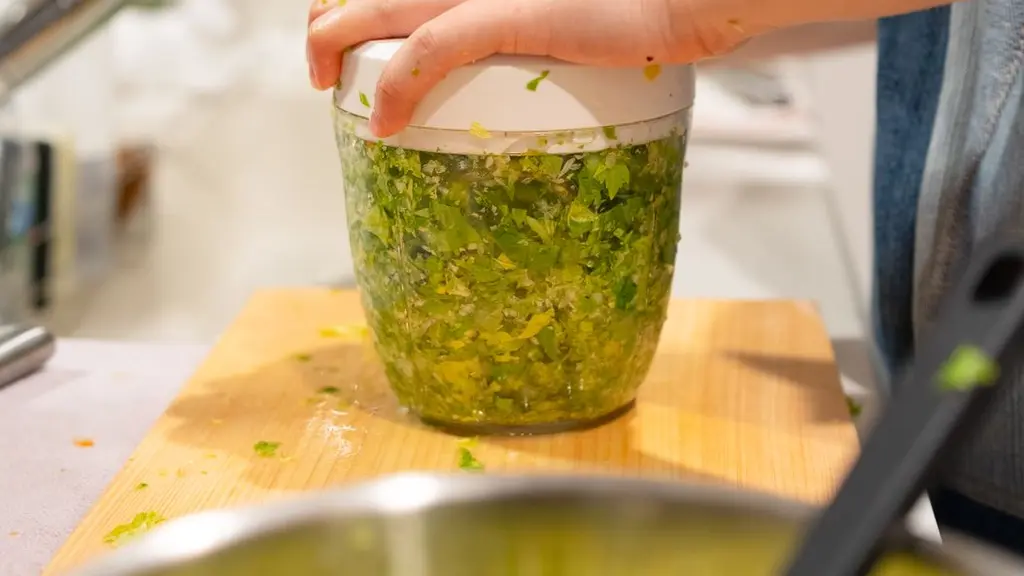
Standing in the shop between a full food processor with its price tag and a cheap little chopper, you are unsure: will the chopper do, or do you have to pay for the big machine? The confusion is fair, because both cut and both run on a motor with a blade, so people assume they are the same thing. In reality the difference is in the bowl size, the attachments, and the tasks each can handle, and the wrong choice means either paying extra for something you do not need, or saving now and finding the machine falls short a month later. Let us break down the difference with practical examples.
The quick answer
A mini chopper is a single-job machine that only chops, in a small bowl. A food processor is a multi-task machine that chops, grates, slices and kneads in a larger bowl. If your work is chopping onions, garlic and nuts for one or two people, a cheap chopper is enough and saves money and space. If you grate in batches, knead, or cook for a family, pay for the full processor up front, because it works out cheaper over time.
Key takeaways
- A food processor is a multi-task machine with a wide bowl and interchangeable tools that chops, grates, slices and kneads, per the definition of a food processor from Britannica.
- A mini chopper is a single-job machine: a small bowl and one blade for quick chopping, with no grating discs and no dough hook.
- The difference is not power, it is bowl size, the type of tools and the tasks: the chopper chops, the processor chops, grates and kneads.
- Kneading needs a dough hook and a wide bowl, which a full processor provides and a mini chopper does not.
- Note: a chopper is not a blender. A blender works on liquids in a tall jug (definition of a blender from Britannica), while a chopper chops semi-dry ingredients in a small bowl.
What does a mini chopper actually do?
A mini chopper is a simple, single-job machine: chopping. Its bowl is small, usually 0.5 to 1 litre, with one blade (or a twin blade) that spins fast and chops whatever is inside into small pieces. There are no grating discs, no slicing discs, and no dough hook. You just drop in the ingredients and pulse the button a few times until you reach the texture you want.
Practical uses: chop onions and garlic quickly with no tears, blitz a few nuts, make a light sauce or dip, chop pepper and tomato for a small amount. In short, it is the answer if your main work is simple chopping for one or two people, and you want something cheap, easy to wash, and small enough to tuck into a cupboard.
What does a food processor do beyond that?
A food processor is a multi-task prep machine, and that is the core difference. Its bowl is wider (usually 2 to 3 litres), and it takes more than one tool: an S-shaped blade for chopping, discs for grating cheese and carrots, discs for cutting even slices, and a dough hook on full models. In other words, it does everything a chopper does and a great deal more (definition of a food processor from Britannica).
Practical uses: chop large amounts of vegetables, grate cheese, carrots and potatoes, slice cucumber and courgette into even pieces, knead pizza and pastry dough, and grind nuts. If you cook varied meals and for a family, the processor saves you the longest, most tedious part of cooking. For more, we have a full guide on food processor uses.
The difference in one table
To choose quickly, here is a direct comparison between the two machines by task:
| Task | Mini chopper | Food processor |
|---|---|---|
| Chopping onion and garlic, small amount | Excellent | Excellent |
| Chopping big batches for a family | Weak (small bowl) | Excellent |
| Grating cheese and carrots | No | Excellent (with discs) |
| Slicing even pieces | No | Excellent (with discs) |
| Kneading dough | No | Excellent (with dough hook) |
| Grinding nuts in quantity | Limited | Excellent |
| Starting price | Cheapest | Higher |
| Storage footprint | Small | Larger |
The simple rule: if the task is simple chopping of a small amount, a chopper is enough. If you need grating, slicing, kneading or big batches, that is a food processor job.
So which do I choose, and when is a chopper enough?
A cheap chopper is not a wrong choice in itself, it is just built for less work. The 3 clearest scenarios:
- You cook for one or two and your work is simple chopping: a mini chopper is enough and saves money and space. You do not need a full processor to chop one onion and a clove of garlic.
- You grate in batches, knead, or cook for a family: the full processor is the priority. The chopper will fall short on grating and kneading, and you will end up buying the processor later anyway, paying twice.
- You want to save now but know you will expand: start with a small budget food processor instead of a chopper. It takes a similar footprint but does far more, so it grows with your needs.
That second scenario is the most common in Egyptian kitchens, which is why a full processor often works out cheaper over time if your cooking is varied.
A budget pick that opens the door to a full processor
If you have decided you genuinely need food processor tasks (chopping, grating, light kneading) but your budget is tight, the Sonai SH-5800 is a practical example of the lowest sensible entry point: 800W of power for everyday tasks, a 1.2L bowl suited to small kitchens, and a widely available Egyptian brand. We did not recommend it for being the strongest on paper, we recommended it because it is the cheapest way to move from the limits of a chopper to real processor tasks without paying much, which is why it is one of the picks in our guide to the best food processor in Egypt. Its expected trade-off is that the bowl is small for big-family batches and the accessories are basic. You will find its current price and Noon link in the card below.
Read any comparison in a minute
- Ask yourself: is my work simple chopping of a small amount, or grating, slicing, kneading and batches?
- Simple chopping and small amounts then a mini chopper. Grating or kneading or batches then a food processor.
- If you will expand soon, start with a budget processor instead of paying twice, and compare the jobs in food processor uses.
- Remember a chopper is not a blender, so if that confuses you too, read food processor vs blender.
- For the full step-by-step detail, head back to our guide to choosing a food processor, or browse our food processors section.
Sources
- Britannica, “Food processor”, definition of a food processor and its tasks (chopping, grating, kneading) and the interchangeable tools that set it apart from simpler machines: https://www.britannica.com/technology/food-processor
- Britannica, “Blender”, definition of a blender, its jug shape and how it works on liquids, to clarify that a chopper is not a blender: https://www.britannica.com/dictionary/blender
This analysis is based on published information from Britannica (Food processor), Britannica (Blender).
Frequently asked questions
What is the difference between a food processor and a mini chopper?
A mini chopper is a single-job machine: a small 0.5 to 1 litre bowl with one blade that chops onions, garlic and nuts. A food processor is a multi-task machine: a larger 2 to 3 litre bowl, grating and slicing discs, and a dough hook on full models, so it chops, grates, slices and kneads, not just chops.
Will a cheap chopper do the job instead of a food processor?
If your main work is chopping onions, garlic and tomatoes plus a few nuts for one or two people, a mini chopper is enough and saves money and space. But if you knead dough, grate cheese and carrots in batches, or cook for a big family, the chopper will fall short and a full processor works out cheaper over time.
Can a mini chopper knead dough?
Usually not. A mini chopper has a narrow bowl and a blade built for chopping, not kneading, so the dough wraps around the blade and overheats the motor. Kneading needs a dough hook and a wide bowl, which a full food processor provides and a mini chopper does not.
What is the cheapest option on a tight budget?
If you genuinely need food processor tasks (chopping, grating, light kneading) at the lowest price, the Sonai SH-5800 is one of the best budget options at 800W from a widely available Egyptian brand. If you only need simple chopping, a mini chopper will be cheaper. Define your tasks first, then choose.