
 UAE
UAE  Saudi Arabia
  USA
USA How to Clean an Air Purifier (and How Often)
We may earn a commission from purchases through our links, at no extra cost to you. How we choose · Disclosure.
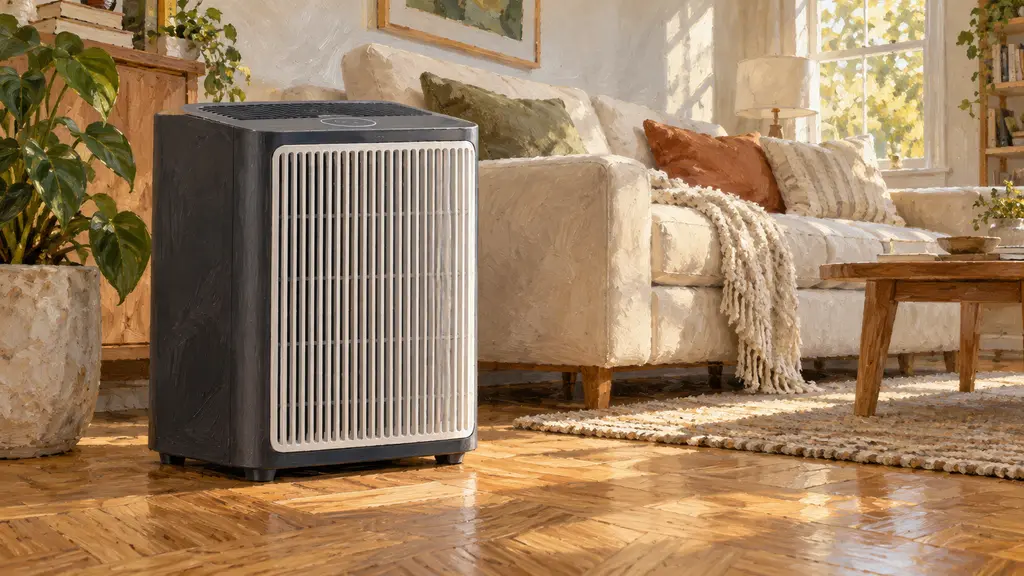
An air purifier isn’t the kind of appliance you switch on and forget, because it’s constantly pulling in dust and fine particles, and all of that has to go somewhere. It goes into the filter. If the filter builds up dust and gets ignored, the unit keeps running but pulls weaker airflow and cleans less. The good news is that cleaning an air purifier isn’t complicated: the pre-filter gets vacuumed or washed every two to four weeks, and the HEPA filter gets replaced every six months to a year depending on your model and how dusty your space is.
The quick answer
Clean the pre-filter (the mesh that catches hair, lint, and larger dust) by vacuuming or washing it every two to four weeks, and wipe the outside of the unit regularly. The HEPA filter inside is usually not washed, and gets replaced every six months to a year depending on use. If airflow feels weaker or the fan sounds louder, that’s a sign replacement time is close.
Key takeaways
- An air purifier works on a simple principle: a fan pulls room air through layers of filtration before returning it clean, and the first layer (the pre-filter) catches most of the visible debris (air purifier definition from US EPA).
- A true HEPA filter is designed to be replaced, not washed, since water damages the fine fibers that trap small dust particles (HEPA filter definition from US EPA).
- Neglecting the pre-filter clogs it fast, forcing the unit to work harder to pull the same volume of air, which uses more electricity and cleans less.
- A louder fan and weaker output are the two biggest signs the filter needs attention before its expected replacement date.
- No strong cleaners or sprays are needed inside the unit, a cloth and light vacuuming cover most routine maintenance.
Why regular filter cleaning matters
An air purifier pulls in all the air in the room, dust, lint, and pet hair included, and passes it through a pre-filter (a mesh or foam layer) that catches the larger particles first, then a HEPA filter that catches the fine particles you can’t normally see. If the pre-filter builds up dust and gets left alone, not enough air reaches the HEPA filter, and the fan works harder to compensate, which raises the noise and lowers how much air actually gets filtered per minute.
The result is that a well-specced unit at a good price can end up performing far below what’s printed on the box, just because someone forgot to clean a simple pre-filter. The fix isn’t complicated or time-consuming.
Cleaning an air purifier step by step
- Unplug the unit first. Never clean it while it’s plugged in.
- Open the filter housing per your model’s manual. Most units open from the back or side with a clip or a simple hinge.
- Remove the pre-filter and shake it out or vacuum it with a brush attachment to lift built-up dust and lint.
- If your model allows washing, rinse the pre-filter with lukewarm water only, and let it dry completely before reinstalling (a damp filter causes moisture and odor).
- Don’t touch or wash the HEPA filter unless the manufacturer’s manual explicitly says so, it’s usually meant for replacement, not washing.
- Wipe the outside of the unit and the air intake and outlet vents with a dry or slightly damp cloth to remove surface dust.
- Reassemble everything and make sure it’s seated properly before turning the unit back on.
Pre-filter versus HEPA filter: the maintenance difference
| Filter | Cleaning method | How often |
|---|---|---|
| Pre-filter | Vacuum or rinse with lukewarm water (model-dependent) | Every 2 to 4 weeks |
| HEPA filter | Replace, not usually washed | Every 6 to 12 months |
| Carbon filter (if present) | Replace | Every 3 to 6 months depending on use |
| Outer casing | Wipe with a cloth | Whenever visible dust builds up |
The general rule: the closer a filter sits to the source of dust (the pre-filter), the more often it needs cleaning. And the finer its job (HEPA and carbon), the more replacement matters over washing.
Signs the filter needs replacing, not just cleaning
- Airflow feels weaker than before, even after cleaning the pre-filter.
- The fan sounds louder than usual at the same speed setting you always use.
- An odd or stale smell comes from the unit while it’s running.
- A filter indicator light is on, if your model supports the feature.
- The pre-filter stays visibly dark and doesn’t come clean even after repeated washing.
If the filter has reached the end of its usable life and stops cleaning properly even with routine maintenance, the fix isn’t washing it again, it’s swapping in a replacement HEPA filter that fits your specific model. Check your unit’s manual for the correct replacement filter code, and budget for it as a yearly cost on top of the purchase price.
The air purifier that makes maintenance easy
If you’re still shopping for one, easy filter access makes a real difference to whether you actually keep up with cleaning. A practical example from our shortlist: the LEVOIT Bedroom HEPA opens its filter housing without tools, which makes the weekly vacuum or rinse a non-issue. We didn’t pick it for being the cheapest, we picked it because the balance of true HEPA filtration and thousands of trusted reviews on Amazon.eg makes sense, which is why it tops our guide to the best air purifier in Egypt. You’ll find its current price and buy link in the card below.
When to stop and call a technician
- Airflow stays weak after the pre-filter and vents are cleaned.
- The filter indicator remains on after the approved cleaning or replacement and reset.
- A musty smell remains after every washable part is fully dry.
- The filter is torn, damaged, or no longer fits correctly.
Stop using the air purifier and have it checked by a qualified technician before using it again.
Bottom line
Cleaning an air purifier isn’t a big job, but it’s what separates a unit running at full efficiency from one using more power and cleaning less. Wash the pre-filter every two to four weeks, wipe the outside regularly, and leave the HEPA filter for replacement on the schedule in your model’s manual rather than washing it. If the unit still feels weaker than before despite cleaning, see my air purifier is not working, what should I check first. If odor rather than weak airflow is the problem, read why does my air purifier smell bad. And if you’re still deciding whether to buy one at all, see is an air purifier actually worth it, browse our guide on how to choose an air purifier, or check out air purifiers in Egypt.
Sources
- US EPA, “Guide to air cleaners in the home”, definition of the air purifier and its filtration stages: https://www.epa.gov/indoor-air-quality-iaq/guide-air-cleaners-home
- US EPA, “What is a HEPA filter”, definition of the HEPA filter and how it captures fine particles: https://www.epa.gov/indoor-air-quality-iaq/what-hepa-filter
This analysis is based on published information from US EPA (Guide to air cleaners in the home), US EPA (What is a HEPA filter).
Frequently asked questions
How often should I clean my air purifier?
The pre-filter (the mesh that catches hair, lint, and larger dust) should be vacuumed or washed every two to four weeks depending on how dusty your home is, following your model's instructions. The HEPA filter inside usually isn't washed at all, and typically lasts six months to a year depending on use and dust levels.
Can I wash a HEPA filter with water?
Most true HEPA filters are built to be replaced, not washed, and water can damage the fine fibers that trap dust, reducing how well they work. Check your model's manual first, since some allow light surface vacuuming but not a water wash.
How do I know if my air purifier's filter needs replacing?
Clear signs include weaker airflow than before, a louder fan as it works harder to pull air through a clogged filter, an odd smell, or a filter indicator light if your model has one. If you notice any of these before the expected replacement date, swap the filter early.
Does skipping filter cleaning actually hurt performance?
Yes. A filter clogged with dust lowers the unit's real clean air delivery rate (CADR), meaning it uses more electricity to work just as hard and delivers less clean air than it should. Regular cleaning is what keeps the unit performing at the rate printed on the box.
Can I just wipe down the outside of the unit?
A dry or slightly damp cloth is enough to clear dust from the outside casing and the external vents. Avoid strong chemical cleaners or spraying anything into the air intake or outlet, since that can reach the electrical components inside.