
 UAE
UAE  Saudi Arabia
  USA
USA Stand Mixer for a Home Baking Business: How to Choose
We may earn a commission from purchases through our links, at no extra cost to you. How we choose · Disclosure.
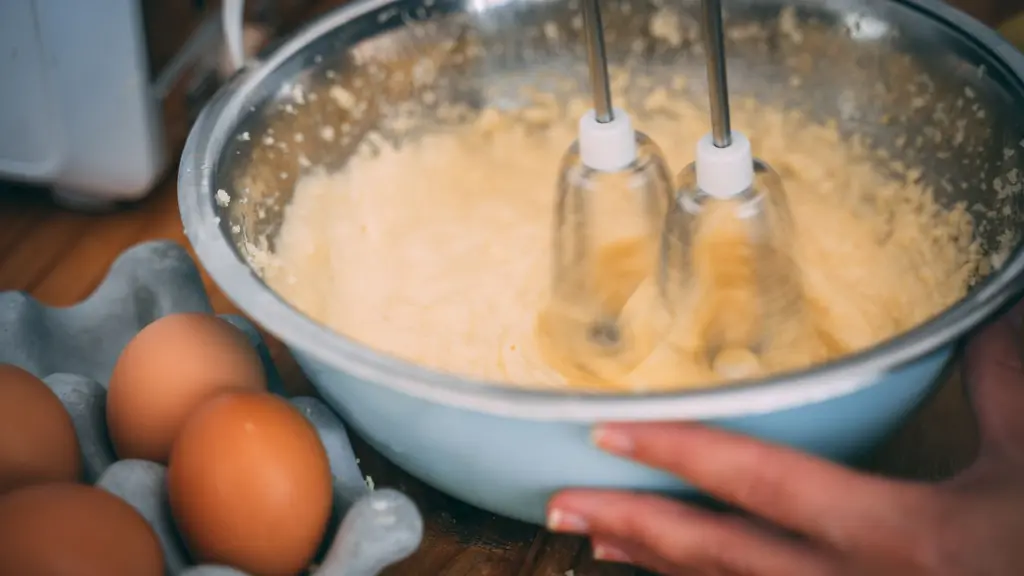
A stand mixer for a home baking business is a different job from a mixer for everyday cooking: it needs to handle repeated daily kneading without overheating or stalling. If your orders are still low, a 4 to 5L bowl at roughly 1000 to 1200 watts is enough. Once your business grows past 30 orders a week, you need a 6L or larger bowl and a motor rated 1500 watts or more.
The quick answer
Choosing a stand mixer for a home baking business comes down to your weekly order volume, not price alone. If you’re still testing the idea, a budget mixer with a 4 to 5L bowl covers the start. Once the business is steady and batch count keeps climbing, you need a 6L-plus bowl and 1500W-plus motor that can knead continuously without overheating or stalling mid-shift. Below, we map your order volume to bowl size and wattage, give an honest comparison between planetary and spiral mixers, and work out the total cost, not just the machine’s price tag.
Before you buy: size your business, not just your budget
The most common mistake when buying a mixer for a home business is choosing on price alone, or picking the same size mixer that’s sitting in a family kitchen, without working out the actual workload. A baking business is different from regular home use: the mixer runs every day or every other day, often two or three batches back to back in the same shift, and that’s what determines whether the motor lasts or burns out fast.
The practical way to size it is to count orders per week, not per month, because the weeks with events or bulk orders reveal your real peak load. This table gives you a starting point:
| Orders per week | Bowl size needed | Wattage band | Expected continuous kneading |
|---|---|---|---|
| Under 10 orders | 4 - 5L | 1000 - 1200W | One or two batches, with a rest between |
| 10 to 30 orders | 5 - 6L | 1200 - 1500W | Two to three batches back to back in a shift |
| Over 30 orders | 6L or larger | 1500W or more | Back-to-back batches through the shift, no overheating |
If your order volume swings (a quiet week, then an event week), size for your peak load, not the average, because a mixer that struggles on your busiest day is the one that stops you delivering when it matters most. For more on bowl sizes and how they relate to kneading power, read our dough mixer sizes guide.
Once you know your business’s real volume, the easiest next step is to check the best stand mixer for heavy dough and bread in Egypt, where the picks are built around the bowl capacity and motor power that repeated kneading needs, not light home use.
Planetary vs spiral: the difference at real volume
Most home stand mixers sold in Egypt are planetary (the bowl stays still and the hook orbits around it), which suits varied work well: dough, light cakes, cream, and whipping eggs. But under repeated heavy dough, a spiral mixer (which turns the bowl itself against a fixed hook) is the commercial-bakery standard, because it spreads the load more evenly on the motor and resists overheating over long runs.
Here’s the honest part: true spiral mixers are rarely sold in the home-appliance market, and their price sits in a completely different tier when you do find one. For a business starting from home, a strong planetary mixer (1400W or more) covers the need well and gives you the flexibility to use it for everything else besides dough. But if your business has grown to the point where you’re kneading heavy dough more than 4 or 5 times a day, that’s a sign you’ve outgrown the home-appliance category, and it may be worth looking at commercial bakery equipment instead of any home mixer, no matter how strong. For the full breakdown of when each type wins, read planetary vs classic mixer.
The total cost: it’s not just the mixer
When budgeting for the business, a common mistake is stopping the math at the mixer’s price tag. A business running regularly will need more than that over the medium term:
| Item | Approximate range |
|---|---|
| A 6L, strong-motor mixer suited to heavy dough | 6,000 to 8,000 EGP |
| An extra spare bowl | 1,500 to 2,500 EGP |
| Extra accessories (spare dough hook, splash guard) | 500 to 1,000 EGP |
| A budget mixer for a very small start | under 4,000 EGP |
A spare bowl isn’t a luxury if your business depends on back-to-back batches: without a second bowl, you’re stuck washing and drying between every batch, and that time turns into a delivery delay. You can check current stand mixer prices to weigh the purchase price against the value the machine gives you across the life of the business, not just on the day you buy it.
When a budget mixer is genuinely enough to start
If you’re at the very start and your orders are under 10 a week, you don’t need to jump straight to the top tier. A reasonably sized budget mixer lets you test the idea, confirm there’s real demand, and keep your capital free for marketing or ingredients in the first few months instead of sinking it all into one machine. Watch for two signals: the mixer starting to overheat or stall mid-batch, and you starting to turn down orders because the machine can’t keep up. Either one means it’s time to upgrade. You can see the options in that tier on our best budget stand mixer page.
Bottom line: how to actually choose
The right question isn’t “what’s the best mixer” in general, it’s “what mixer can handle my business’s volume”:
- Work out your average weekly orders, and size for your peak load, not your lowest week.
- If the work is daily and repeated, choose a 6L-plus bowl and 1500W-plus motor, even if it costs a bit more.
- Budget for a spare bowl and accessories from day one, not two months after you need them.
- If you’re still at the early, low-order stage, start with a budget mixer and upgrade once demand proves out.
Start with our best stand mixer for heavy dough and bread in Egypt picks to see what’s actually in stock right now, based on specs, the consensus of buyer reviews, and local prices.
Sources
- Britannica, “Mixer (kitchen appliance)”, background on the types of home mixers and how they work: https://www.britannica.com/technology/mixer-appliance
This analysis is based on published information from Britannica (Mixer (kitchen appliance)).
Frequently asked questions
What stand mixer works for a home baking business?
It depends on how many orders you get per week. Under 10 orders, a 4 to 5L bowl at roughly 1000 to 1200 watts is enough. Once your business grows past 30 orders a week, you need a 6L or larger bowl and a motor rated 1500 watts or more so it can handle back-to-back batches without overheating.
How much continuous kneading can a heavy-dough mixer handle?
It's not really about minutes, it's about the motor's ability to keep running under a heavy load without overheating or stalling. Generally a 1500W-plus motor with solid gears can knead back-to-back batches through a shift, while a budget mixer needs rest breaks between batches so the motor can cool down.
Is one strong mixer cheaper than two budget ones for my business?
One strong mixer that can handle daily work is usually cheaper in the medium run, because budget mixers running above their rated load break down faster, and that costs you repairs and downtime mid-shift. The one exception is the first few months, if you're still testing the idea and orders are very low.
When should I buy a spare bowl for my stand mixer?
Once you find yourself washing the same bowl more than twice a shift to start the next batch, which slows down your delivery. A spare bowl lets you prep the next batch while the first one is still baking, and it's a small investment against the time it saves.
Can I start a baking business with a budget stand mixer?
Yes, if your orders are still low or you're testing whether the business works at all. A reasonably sized budget mixer lets you start without a big financial risk, and you can upgrade to a stronger mixer once order volume proves out and grows.