
 UAE
UAE  Saudi Arabia
  USA
USA Bottom-Load vs Top-Load Water Dispenser: Which to Pick
We may earn a commission from purchases through our links, at no extra cost to you. How we choose · Disclosure.
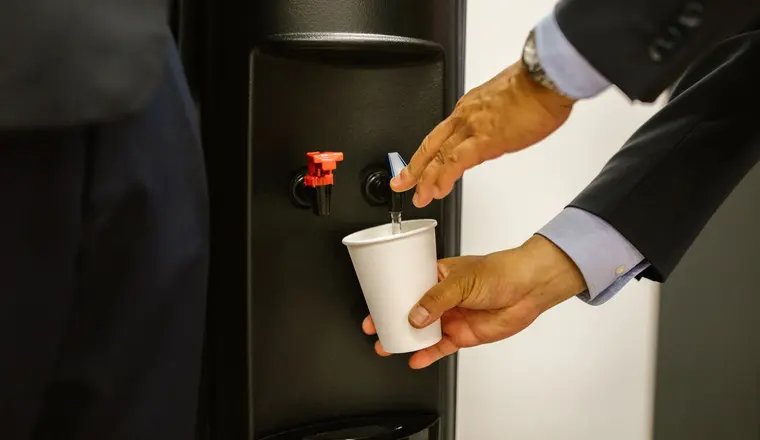
Standing in front of the water dispenser shelf, you’ll hit a very practical question: bottom-load that spares you lifting the bottle, or top-load that’s cheaper and simpler? Each camp has its logic: team bottom-load says there’s no reason to lift 19 kg over your head every week, team top-load says the design is simpler, the price is better, and lifting the bottle isn’t really an issue anyway. The good news is there’s no wrong answer here, just an answer that fits your home and your use. Let’s break it down.
The quick answer
Bottom-load places the bottle in a drawer underneath the unit, so you never lift or flip a heavy bottle over your head, which is a real comfort for daily use and safer for older family members. Top-load requires removing the empty bottle and lifting and flipping the full one onto the unit every time it runs out, but it saves you a clear price gap starting around 4,500 EGP. The practical rule: if lifting the bottle is real effort for you, bottom-load earns its premium. If it isn’t a problem, save the money and go top-load.
The key points
- How it’s fitted: bottom-load has the bottle in a drawer underneath; top-load has the bottle flipped on top of the unit.
- Daily effort: bottom-load is zero effort for lifting; top-load needs lifting and flipping a heavy bottle every time it runs out.
- Price: the top-load model in our picks with a live offer is the Speed at about 5,000 EGP; bottom-load starts at about 9,500 EGP or more, a gap of about 4,500 EGP.
- Footprint: both need stable floor space, but bottom-load units are usually a bit larger outside due to the bottle drawer.
- Safety: bottom-load is clearly safer for older family members and children, since there’s no lifting heavy weight near the drinking area.
- Who wins: there’s no absolute winner, just the buyer who matched the purchase to their real use and their ability to lift weight.
Top-load water dispensers: simplicity at the lowest price
Top-loading is the dispenser in its basic form: a water bottle (usually 19L) flips and mounts on top of the unit, and water flows down by plain gravity with no pump involved. Because the design is simpler, it’s a consistently cheaper tier, with plenty of options from local brands like Fresh, Tornado, and Speed.
Its limits are clear: every time the bottle runs out, you remove the empty one and lift a new full bottle (around 19 kg) and flip it onto the unit, real effort that repeats regularly, especially if there isn’t always someone strong at home to do it. The available top-load example in our picks is the Speed at about 5,000 EGP; the Tornado 2-Tap that used to set the top of this range lost its featured offer, so its old price is a historical reference rather than something you can pay today. Our full ranking of the class is in the best water dispenser in Egypt.
Bottom-load water dispensers: daily comfort for a calculated premium
Bottom-loading takes the same water dispenser idea and flips the installation: the bottle sits in a drawer underneath the unit, and an internal pump draws the water up instead of relying on gravity. The practical result: you open the drawer, place the new bottle, close it, done, with no lifting or flipping any heavy weight over your head ever again. That’s a real difference in daily comfort, especially in homes with older family members or anyone who finds lifting weight difficult.
The trade-off is one main thing: a real price premium (the bottom-load dispenser with a live offer on our list starts around 9,500 EGP, versus top-load starting at 5,000). Our chosen examples from this class are in the best water dispenser ranking too, and the class has thinned out: two of the bottom-load units we listed lost their featured offers.
Quick comparison: which for what?
| Criterion | Top-load | Bottom-load |
|---|---|---|
| Installation | Flip the bottle onto the unit | Bottle sits in a drawer underneath |
| Daily effort | Lift and flip a heavy bottle every time it runs out | Zero effort for lifting the bottle |
| Approx. price | ≈ 5,000 for the one still available | ≈ 9,500 and up |
| Safety for older users | Less safe | Clearly safer |
| Best for | Anyone for whom lifting the bottle isn’t an issue | Anyone who wants full daily comfort |
The simple rule: work out who actually changes the bottle in your home, and their real ability to lift 19 kg regularly. If the answer is “no problem”, save the money and go top-load. If the answer is “it’s always a struggle”, the 4,500 EGP premium for bottom-load is a comfortable long-term investment.
So which should I pick?
Start from two questions: who changes the water bottle in your home? And is lifting 19 kg a real effort for you?
If your home has someone strong who changes the bottle without issue, top-load saves you real money for the same daily service. If your home has older family members, or the weight really is a problem, or you simply want more comfort, bottom-load will make itself felt every week. The working example we used here, the Tornado 3-Tap Bottom-Loading dispenser, averaged 4.1 from 77 ratings and settled the whole dispenser question in one unit, but its featured offer was unavailable when we re-checked on 23 August 2026, so it stays on this page as a reference rather than a recommendation. For the bottom-load and top-load units that still have a live offer, and the price gap between them as it stands today, start from the best water dispenser guide.
The featured offer was unavailable at the last update.
Read your need in a minute
- Work out who actually changes the bottle: lifting 19 kg no problem? Top-load. A real struggle? Bottom-load.
- Going top-load? Put the money into the right number of taps and a model with a real review record; our ranking is in the best water dispenser in Egypt.
- Going bottom-load? Budget the price premium and the floor space needed; the picks are in the same ranking.
- Check current price ranges at water dispenser prices before you commit, and for the full criteria read how to choose a water dispenser.
- And to browse every option, see our whole water dispensers section.
This analysis is based on published information from Amazon.eg.
Frequently asked questions
Does a bottom-load dispenser leak more easily than a top-load one?
No, there's no fundamental difference in leaking between the two types if the unit works and is installed correctly. Bottom-load relies on an internal pump that draws water up from the bottle underneath, while top-load relies on plain gravity. Both can leak if the bottle is fitted incorrectly or has a manufacturing defect, so the cause is installation, not the loading type.
Is bottom-loading harder to install?
No, it's actually easier for daily use. You place the bottle in the drawer underneath and close it, with no lifting or flipping. Top-loading is the one that needs real effort: removing the empty bottle, lifting the new full bottle (about 19 kg), and flipping it onto the unit, effort that repeats every time the bottle runs out.
How big is the price gap between bottom-load and top-load?
In the Egyptian market right now the gap is clear. Among the units with a live offer, the bottom-load Koldair A-BL sits at ≈ 9,506 EGP and the top-load Speed at ≈ 5,000 EGP, so you are paying about 4,500 EGP for the daily convenience. Prices are approximate at publication and change.
Who actually needs bottom-loading?
Anyone with older family members at home, or anyone who finds lifting heavy weight difficult, or anyone using the dispenser daily who's tired of the repeated bottle-change effort. If you're in good health and price is the priority, top-loading delivers the same daily service for far less money.