
 UAE
UAE  Saudi Arabia
  USA
USA How to Clean a Water Dispenser (and How Often)
We may earn a commission from purchases through our links, at no extra cost to you. How we choose · Disclosure.
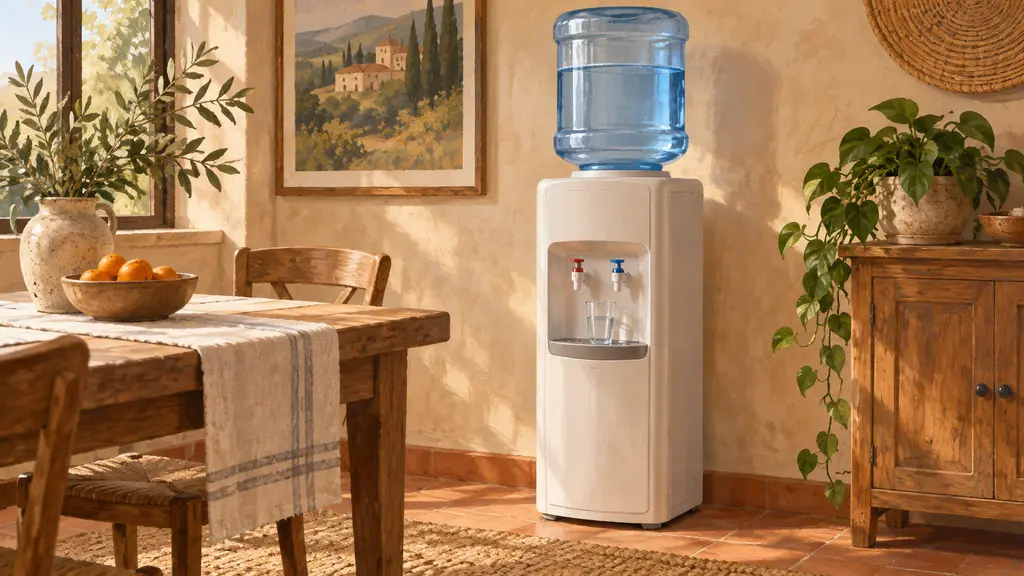
Here’s what it actually takes: wipe the drip tray and taps with a damp cloth every week, and fully sanitize the tank inside with diluted white vinegar every month or two, sooner if your tap water is hard. Sanitizing is simple: fill it, let it sit, and rinse, with no complicated tools or full disassembly needed. Skip this step and you’ll be the one finding an odd taste in the water or white buildup around the spout after a few months.
Never mix vinegar with bleach or any chlorine-based cleaner - the combination releases toxic gases. Use one cleaner at a time and rinse thoroughly between products.
The quick answer
Wipe the taps and drip tray with a damp cloth weekly, and fully sanitize the water dispenser tank with a diluted white vinegar solution every month or two, depending on how hard your tap water is. Stay away from concentrated bleach, and unplug the unit before any internal cleaning. White mineral scale is normal given Egypt’s hard tap water, and the fix is regular sanitizing, not a stronger cleaning product or a new unit.
Key takeaways
- A water dispenser is essentially an open tank of cold or hot water, so any bacteria or mold in the area finds a suitable environment to grow in without regular cleaning (general background on water coolers from ENERGY STAR).
- Tap water in Egypt is relatively hard, meaning it carries calcium and magnesium minerals that build up over time inside the tank and on the tap nozzles (hard water background from USGS).
- The tap nozzle is the most exposed contamination point, since it’s touched by hand or by a cup several times a day.
- Diluted white vinegar is enough for sanitizing, and there’s usually no need for harsh chemicals.
- Mineral scale isn’t just an eyesore, it makes the pump and taps work harder and shortens the dispenser’s life.
Why regular cleaning actually matters
A water dispenser isn’t just a tube carrying water from the bottle to the tap, it’s an open tank where water sits for hours or even days before it’s poured. Left uncleaned, that space becomes a suitable environment for bacteria and mold to grow, especially around the tap nozzle that gets touched all day. On top of that, Egypt’s tap water is relatively hard, meaning it carries minerals that settle as a white, chalky layer inside the tank and on the taps over time. Skip cleaning long enough and the end result is an odd taste in the water, an unpleasant smell, and visible white buildup right at the spout.
The good news is that proper cleaning isn’t complicated or time-consuming, it just needs a consistent schedule instead of waiting for the problem to show up.
Cleaning a water dispenser step by step
- Unplug the dispenser before any internal cleaning step, and let the hot and cold taps run dry of any remaining water.
- Remove the water bottle (or open the bottom-load drawer if your model loads from the bottom), and wipe the bottle neck and mounting collar before fitting a new one.
- Wipe the drip tray and taps from the outside with a damp cloth and mild soap, and rinse well.
- Clean the tap nozzles from the inside with a cotton swab dampened in diluted white vinegar, which removes any scale or residue that’s started to form.
- Sanitize the internal tank by filling the tank (or the internal reservoir, depending on the model) with a roughly equal mix of white vinegar and water, and let it sit for one to two hours.
- Drain the solution and rinse the tank several times with plain clean water until the vinegar smell is completely gone.
- Wipe the body of the dispenser from the outside with a damp, well-wrung cloth, and never submerge any part that houses an electrical circuit in water.
- Fit a new water bottle or close the loading drawer, plug the unit back in, and wait about 15 minutes before pouring the first cup.
Cleaning a water dispenser: do and don’t
| Situation | Do | Don’t |
|---|---|---|
| Sanitizing the tank | Diluted white vinegar or a mild sanitizing solution | Concentrated bleach with no dilution |
| Tap nozzle | A cotton swab or a thin dedicated brush | Skip it because it “looks clean from outside” |
| Dispenser body | Wipe the outside with a damp, well-wrung cloth | Submerge any part with an electrical circuit |
| Mineral scale | Soak with vinegar, then rinse thoroughly | Scrape with a metal tool that scratches the interior |
| A new water bottle | Wipe the neck before fitting it | Fit it as-is with no wipe-down |
The practical rule: if you feel like you need extra force or a stronger chemical to “make sure” it’s clean, stop and go back to diluted white vinegar. It’s enough for most situations and won’t leave an odd taste if it’s rinsed out well.
A practical cleaning schedule: daily, weekly, monthly
Not everything needs the same frequency. This schedule saves you time without skipping anything important:
- Daily: a quick wipe of the drip tray if water has pooled in it.
- Weekly: wipe the taps inside and out with a cotton swab, and clean the drip tray with mild soap.
- Monthly to every two months: a full tank sanitize with diluted white vinegar, depending on how hard your tap water is and your daily use.
- Every bottle change: wipe the neck of the new bottle and the mounting collar before installing it.
If your dispenser is older or mineral scale keeps showing up despite regular cleaning, a dedicated water dispenser cleaning brush with a long, thin bristle head that reaches deep into the tank and taps makes the job easier without much disassembly.
A dispenser that’s actually easy to clean
Design makes a real difference in how easy maintenance is. A bottom-load dispenser like the Tornado 3-Tap lets you reach the bottle drawer and the taps without walking around the unit or lifting anything heavy, which makes the monthly sanitize genuinely faster. That unit averaged 4.1 from 77 ratings, but its featured offer was unavailable when we re-checked on 23 August 2026, so it illustrates the design here rather than serving as a buying pick. The bottom-load and top-load units that still have a live offer are in our guide to the best water dispenser in Egypt.
The featured offer was unavailable at the last update.
When to stop and call a technician
- An odd taste or smell remains after the tank is sanitized and rinsed several times.
- Mineral scale still blocks a tap after soaking and gentle cleaning.
- The tank cannot be drained or reached for the cleaning steps described above.
- Any electrical housing has been exposed to water or no longer works normally.
Stop using the water dispenser and have it checked by a qualified technician before using it again.
Bottom line
Cleaning a water dispenser isn’t a big job, it’s just a simple weekly habit plus a monthly tank sanitize. Wipe the taps and drip tray weekly, sanitize the tank with diluted white vinegar every month or two depending on how hard your tap water is, and stay away from concentrated bleach and metal tools that scratch the interior. Mineral scale is normal given Egypt’s tap water, and the fix is regular sanitizing, not something to worry about. If you’re still deciding whether to buy a dispenser at all, read is a water dispenser worth it?, or if you’re torn between bottom-load and top-load see bottom-load vs top-load water dispenser. For the full shortlist with prices, browse our guide to the best water dispenser in Egypt or our water dispensers section.
Sources
- ENERGY STAR, “Water coolers”, general background on water dispensers and their design (an open tank connected to dispensing taps): https://www.energystar.gov/products/water_coolers
- USGS, “Hardness of water”, background on water hardness and how mineral scale forms from calcium and magnesium: https://www.usgs.gov/water-science-school/science/hardness-water
This analysis is based on published information from ENERGY STAR (Water coolers), USGS (Hardness of water).
Frequently asked questions
How often should I clean my water dispenser tank?
Wipe the taps and drip tray weekly, and fully sanitize the internal tank with diluted white vinegar every month or two. Clean more often if your tap water is hard (faster scale buildup) or the bottle changes slowly. If you notice an odd taste or smell, sanitize right away instead of waiting for the schedule.
Should I use bleach to sanitize a water dispenser?
Diluted white vinegar or a mild sanitizing solution (similar strength to what's used for baby bottles) is safe and enough for most homes. Concentrated bleach can leave a chemical taste or smell in the tank if it isn't fully rinsed out, so if you do use it, dilute it heavily and rinse the tank several times with clean water before using the dispenser again.
How do I remove mineral scale from a water dispenser?
That white buildup is mainly calcium from hard tap water, and it forms inside the tank and on the tap nozzles over time. Fill the tank with a roughly equal mix of white vinegar and water, let it sit for one to two hours, then drain it and rinse several times with clean water. If the buildup is heavy or the unit is older, a dedicated dispenser cleaning or descaling product makes the job easier without major disassembly.
Does cleaning a water dispenser actually extend its life?
Yes, and that's one of the main reasons to clean it in the first place. Built-up mineral scale makes the internal pump (on bottom-load models) and the taps work harder, which shortens the life of the mechanical parts over time. A regular clean every month or two keeps the dispenser performing like new.