
 UAE
UAE  Saudi Arabia
  USA
USA Dehumidifier vs Air Purifier: The Difference and Which You Need
We may earn a commission from purchases through our links, at no extra cost to you. How we choose · Disclosure.
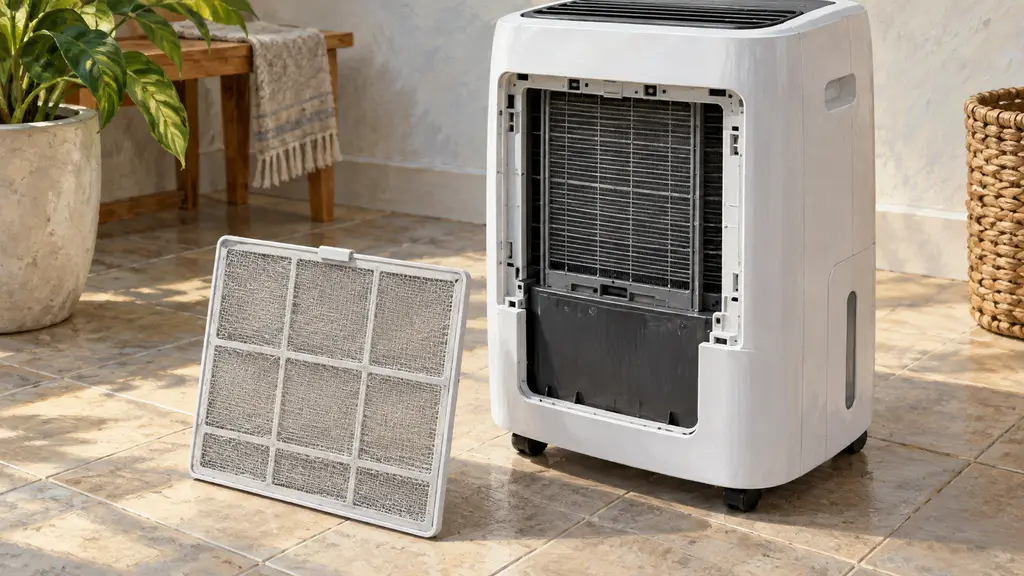
Shopping for a fix to your home’s air problem, you’ll run into a common question: should I buy a dehumidifier or an air purifier? The two names get mentioned in the same breath a lot, but they solve completely different problems. Buy the wrong one and you’ll spend the money while your actual problem stays exactly where it was. Let’s break it down.
The quick answer
A dehumidifier pulls excess moisture out of the air to lower relative humidity and prevent mold, mildew, and that damp smell. An air purifier filters particles like dust, pollen, and smoke by circulating air through a filter. The practical rule: if your problem is condensation on windows, a musty smell, and damp stains, a dehumidifier is the fix. If your problem is dust, sneezing, and allergies, an air purifier is the better call.
The key points
- Function: a dehumidifier controls humidity level; a purifier filters air particles.
- How they work: a dehumidifier pulls in water vapor and collects it in a tank; a purifier pulls air through a filter and returns it clean.
- The sign that tells you which one: condensation, mold, and a musty smell mean humidity; sneezing, allergies, and dust mean purification.
- Best use case: dehumidifiers for storage rooms, closets, bathrooms, and coastal homes; purifiers for rooms with allergies or heavy dust.
- Can you run both: yes, no conflict, each solves a different part of the air-quality problem.
- Who wins: whoever identifies their real problem before buying.
The dehumidifier: controlling humidity level
A dehumidifier pulls air across cold coils, so the water vapor in it condenses and collects in a tank or drains out through a hose. The result: relative humidity in the room drops, which shrinks the environment mold and mildew need to grow and prevents that distinct damp smell, while also protecting wooden furniture and clothes in closets from excess moisture. Egypt’s climate is generally on the dry side, but coastal areas and enclosed spaces like storage rooms and poorly ventilated bathrooms can still suffer from localized humidity even in that dry climate.
Its limits are clear: a dehumidifier doesn’t filter dust, particles, or pollen, and its air intake has no real filtration stage. Our full ranking of the category is in the best dehumidifier in Egypt.
The air purifier: filtering particles
An air purifier pulls room air through a filter (usually HEPA) that traps fine particles like dust, pollen, cigarette smoke, and some odors, then returns cleaner air to the room. It’s the better fix for allergy problems, constant sneezing, and dust that builds up fast on furniture, especially in cities with air pollution or seasonal dust.
The trade-off: a purifier does nothing to control humidity level. If your problem is mold or condensation on windows, running it won’t change that, because it was never built to handle it.
Quick comparison: which for what?
| Criterion | Dehumidifier | Air purifier |
|---|---|---|
| Function | Lowers humidity level | Filters dust and smoke particles |
| The sign it fixes | Condensation, mold, damp smell | Sneezing, allergies, fast dust buildup |
| How it works | Pulls in water vapor and collects it | Passes air through a filter |
| Best for | Storage rooms, closets, bathrooms, coastal homes | Rooms with allergies or heavy dust |
| Can you combine them? | Yes, no conflict | Yes, no conflict |
The simple rule: identify the sign you’re actually seeing in your home before you buy. Condensation and mold mean a dehumidifier, sneezing and dust mean an air purifier. And if both problems exist together, the complete fix is two separate units, not one machine that does everything.
So which should I pick?
Start from one simple question: what are you actually noticing in your home? Condensation on windows, a musty smell, damp stains on walls or ceilings, clothes feeling damp in the closet? That all points to a humidity problem, and a dehumidifier is the direct fix. If instead you’re noticing frequent sneezing, nasal allergies, and a layer of dust that comes right back on furniture, your problem is particles, not humidity, and an air purifier is what will make the difference.
If you’ve decided you need a dehumidifier, a working example we recommend from this class: the Smart Compressor Dehumidifier at 30L/day, combining the biggest drying capacity among our picks with app control, and it’s the most-reviewed model among our picks, with thousands of positive reviews on Amazon.eg. We didn’t pick it for being the cheapest; we picked it because it carries the biggest genuine review base and covers even full apartments, which is what made it our top pick in the best dehumidifier guide. Its current price and Amazon link are in the card below.
See the Smart Compressor Dehumidifier 30L price on Amazon.eg ↗
Read your need in a minute
- Identify the core sign: condensation, mold, and damp smell? A dehumidifier. Sneezing, allergies, and dust? An air purifier.
- Going with a dehumidifier? Match the drying capacity to your space; our ranking is in the best dehumidifier in Egypt.
- Check current price ranges at dehumidifier prices before you commit.
- For the full buying criteria in detail, read how to choose a dehumidifier.
- And to browse every option, see our whole dehumidifiers section.
This analysis is based on published information from Amazon.eg.
Frequently asked questions
Does a dehumidifier improve air quality like a purifier does?
Only partly. Reducing high humidity shrinks the environment mold and mildew need to grow, which does affect air quality, but it doesn't filter dust particles, pollen, or smoke the way a HEPA air purifier does. If your problem is dampness and a musty smell, a dehumidifier is the direct fix. If your problem is dust and allergies, a purifier is the better call.
Can I use both in the same room?
Yes, and there's no conflict between them. A dehumidifier controls the humidity level and a purifier filters air particles, and each does its job independently. In rooms that have both problems at once (high humidity and heavy dust), running both gives a more complete result than relying on just one.
How do I know if my problem is humidity or dust?
Humidity signs are clear: condensation on windows, a musty smell, dark or greenish stains on walls or ceilings, clothes feeling damp in a closet. Dust and particle signs: frequent sneezing, nasal allergies, a fast-building layer of dust on furniture. If you're seeing humidity signs, start with a dehumidifier; if it's dust and allergies, a purifier comes first.
Which one is cheaper if my budget is tight?
Both categories have roughly similar price tiers depending on capacity, so neither is cheaper in an absolute sense. The right call is to identify your actual problem first (humidity or dust) and buy the unit that solves it, instead of buying a purifier assuming it'll fix a humidity problem, because it won't.