
 UAE
UAE  Saudi Arabia
  USA
USA Dehumidifier vs Humidifier: What's the Difference?
We may earn a commission from purchases through our links, at no extra cost to you. How we choose · Disclosure.
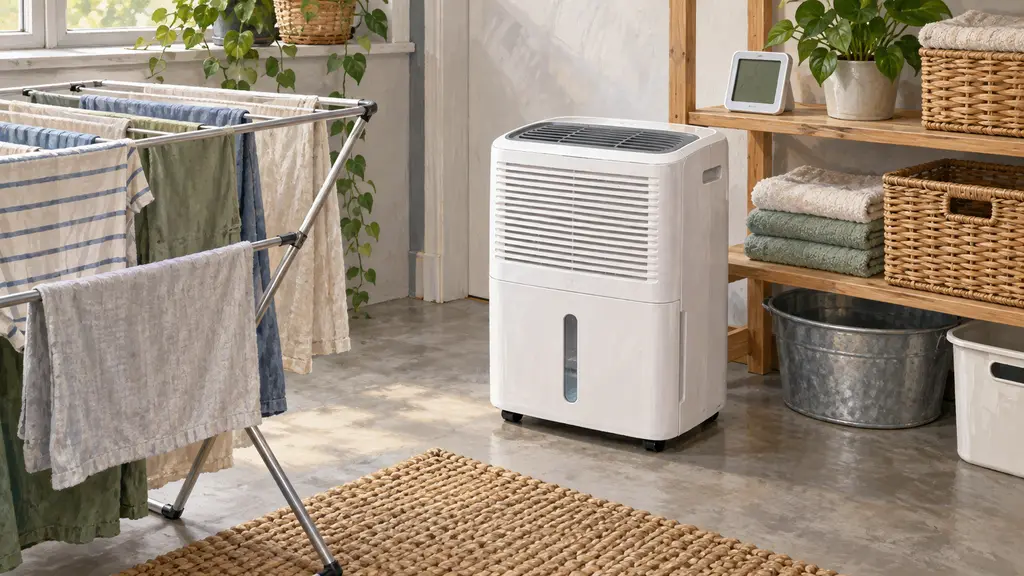
A dehumidifier and a humidifier do exactly opposite jobs. A dehumidifier pulls excess moisture out of the air to prevent mold and that musty smell, while a humidifier adds water vapor to dry air to ease dry skin and a scratchy throat. The names sound alike, which trips a lot of people up, and buying the wrong one won’t fix your problem, it can even make it worse.
The quick answer
A dehumidifier lowers the humidity level in the air, and a humidifier raises it. If your home has condensation on windows, a musty smell, and damp stains, you need a dehumidifier. If you’re dealing with dry skin, a dry throat, or frequent nosebleeds, especially in winter or with heavy AC use, you need a humidifier. The two solve completely different problems and aren’t substitutes for each other.
Key points
- The function is the opposite: a dehumidifier reduces water vapor in the air, a humidifier adds it.
- The sign that tells you which: condensation and mold mean too much humidity, dryness and a scratchy throat mean too little.
- Egypt’s climate is generally warm, and the more common problem here is localized excess humidity (storage rooms, closets, coastal homes), not dry air.
- Using the wrong unit fixes nothing, and if you run both in the same room at once, they cancel each other out.
- Both fall under the same broad category of air quality appliances but work on completely different principles inside.
The dehumidifier: removes excess moisture
A dehumidifier pulls room air across cold coils (in most models), so the water vapor condenses and collects in a tank or drains out via a hose. The result is lower relative humidity, which prevents mold and mildew growth and that distinct damp smell, while protecting clothes and wooden furniture from excess moisture. This problem is common in storage rooms, closets, and poorly ventilated bathrooms, and in homes near the coast. Our full ranking of the category is in the best dehumidifier in Egypt.
The humidifier: adds moisture to dry air
A humidifier does exactly the opposite: it releases water vapor or a fine mist into the air to raise relative humidity, usually through a steam or ultrasonic mechanism. This helps when the air gets too dry, which happens most often in winter with heating, or in rooms running heavy air conditioning for long stretches, and it can cause dry skin, a scratchy throat, itchy eyes, and nosebleeds in some people, children especially.
Quick comparison: dehumidifier or humidifier?
| Criterion | Dehumidifier | Humidifier |
|---|---|---|
| Function | Lowers humidity level | Raises humidity level |
| The sign it fixes | Condensation, mold, damp smell | Dry skin, scratchy throat, nosebleeds |
| How it works | Pulls in water vapor and collects it | Releases water vapor or mist into the air |
| Best for | Storage rooms, closets, bathrooms, coastal homes | Rooms with heavy AC or winter heating |
| Can you run both at once? | No, they cancel each other out | No, they cancel each other out |
The simple rule: identify the sign you’re actually seeing at home. Condensation and mold mean a dehumidifier, dryness and a scratchy throat mean a humidifier. The names sound similar, but the function is completely reversed.
So which should I get?
Ask yourself one question: is my air too humid or too dry? If you’re noticing condensation on windows, a musty smell, or damp stains on walls, your problem is excess humidity, and a dehumidifier is the fix. If you’re feeling dry skin, a scratchy throat, or irritated eyes, especially in winter or with the AC running constantly, your problem is the opposite, and a humidifier is what will help. Egypt’s climate is generally warm and not especially dry, so excess humidity (particularly in storage rooms, closets, and coastal homes) is the more common problem here.
If you’ve decided you need a dehumidifier, a working example from our picks: the Smart Compressor Dehumidifier at 30L/day, combining the biggest drying capacity on our list with app control, and it’s the most-reviewed model among our picks, with thousands of positive reviews on Amazon.eg. We didn’t pick it for being the cheapest; we picked it because it covers even full apartments and backs itself with a genuinely large review base, which is what made it our top pick in the best dehumidifier guide. Its current price and Amazon link are in the card below.
See the Smart Compressor Dehumidifier 30L price on Amazon.eg ↗
Read your need in a minute
- Identify the core sign: condensation and mold? A dehumidifier. Dryness and a scratchy throat? A humidifier.
- Still not sure exactly how a dehumidifier works? Read how does a dehumidifier work?.
- Keep confusing it with an air purifier too? See dehumidifier vs air purifier.
- On a tight budget? Read the best budget dehumidifier for the money.
- For the full buying criteria, head back to our guide on how to choose a dehumidifier, and browse our dehumidifiers section for every option.
Sources
- ENERGY STAR, “Dehumidifiers”, definition and mechanism of the dehumidifier: https://www.energystar.gov/products/dehumidifiers
- US EPA, “Use and care of home humidifiers”, definition and mechanism of the humidifier: https://www.epa.gov/indoor-air-quality-iaq/use-and-care-home-humidifiers
This analysis is based on published information from ENERGY STAR (Dehumidifiers), US EPA (Use and care of home humidifiers).
Frequently asked questions
Can I run a humidifier and a dehumidifier in the same room at the same time?
Practically, no, because they cancel each other out: one adds moisture and the other removes it. If you need both somewhere in the house, it's better to run them in different rooms, or at different times of year depending on the actual problem in each space.
How do I know my home needs a humidifier instead of a dehumidifier?
If you're noticing dry skin or lips, a scratchy throat in the morning, irritated eyes, or frequent nosebleeds, especially in winter or with the AC running a lot, those are signs of air that's too dry, and a humidifier is the fix here, not a dehumidifier.
Does Egypt's climate even need a humidifier?
Egypt's climate is generally warm and not especially dry compared to other countries, so dry-air problems are less common than excess humidity in storage rooms, closets, and coastal homes. A humidifier is useful in specific cases, like rooms with heavy AC use or winter heating, not as a general fix for every home.
Which one is cheaper, a dehumidifier or a humidifier?
Both categories sit in roughly similar price ranges depending on capacity and brand, so neither is cheaper in an absolute sense. The right call is identifying your actual problem first (excess humidity or dryness) and buying the unit that solves it, rather than deciding on price alone.