
 UAE
UAE  Saudi Arabia
  USA
USA AC Dry Mode vs a Dehumidifier: What's the Real Difference
We may earn a commission from purchases through our links, at no extra cost to you. How we choose · Disclosure.
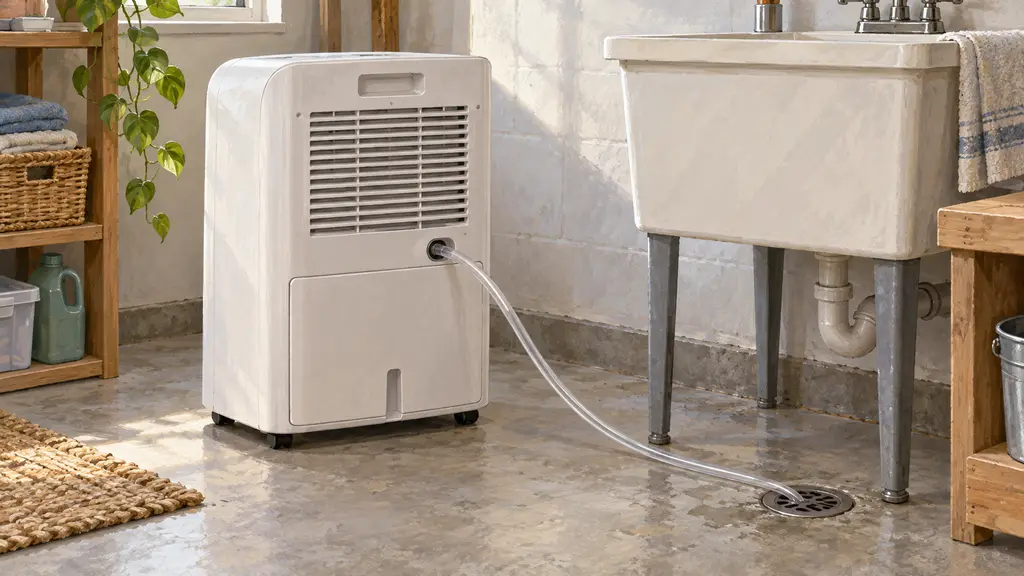
AC dry mode only reduces humidity as a side effect of cooling, not as its main job, so it’s much weaker and slower than a dehumidifier built specifically for the task. A dehumidifier pulls water vapor out of the air as its only function, and it runs on its own without cooling the room, which matters if you’re dealing with persistent mold or a space that has no air conditioning at all, like a storage room or a closet. If your humidity is a real, ongoing problem rather than a light seasonal one, the dedicated unit will fix it faster and more reliably.
The quick answer
AC dry mode only reduces humidity as a side effect, and its effect is limited and stops once the AC turns off. A dehumidifier is built for the job entirely, and it runs without cooling the room. If your humidity is light and seasonal in a room that already has AC, dry mode might cover you for now. If you’re dealing with recurring mold, a persistent musty smell, or a space with no air conditioning like a storage room or bathroom, a dehumidifier is the real fix.
Key takeaways
- Dry mode shuts off the main compressor and runs the fan slower, so the humidity drop is a side effect of cooling, not an independent function (background on air conditioning systems from Britannica).
- A dehumidifier’s only job is pulling water vapor out of the air, so it reaches and holds a target humidity level faster and more reliably than an AC ever will.
- A dehumidifier works without any cooling, which makes it the only option for spaces with no AC unit, like a storage room or a closet.
- Running AC on dry mode for hours burns power without necessarily solving a persistent or high-humidity problem.
- The right call depends on the actual problem: light seasonal humidity in an air-conditioned room, dry mode might be enough. Persistent dampness or a space with no AC, a dedicated unit is the answer.
How does AC dry mode actually work?
When you set the AC to Dry, the unit shuts off the main compressor, the part that does the actual cooling, and runs the fan at a much slower speed. Air still passes over cold coils, so the moisture in it condenses and drains off like normal AC condensate, which does reduce humidity a little. The catch is that the AC isn’t built to measure humidity and target a level, it just runs a slow cycle, so the result is a mild, unpredictable drop rather than a steady number the way a dedicated unit delivers.
How does a dehumidifier actually work?
A dehumidifier has one job: pull air from the room, pass it over cold coils, condense the water vapor into a tank or drain it out through a hose, then return dry air to the room. Most units actively measure relative humidity and keep running until they hit the level you set, which gives far more consistency and precision than a cooling unit that dries the air as a side effect. Its biggest advantage is that it doesn’t need to cool the room at all, making it the only real fix for spaces like a storage room or a closet that have no AC unit to begin with.
Quick comparison: AC dry mode vs a dedicated dehumidifier
| Criterion | AC dry mode | Dedicated dehumidifier |
|---|---|---|
| Main function | Cooling, drying is a side effect | Removing humidity only |
| Consistency of results | Mild and unreliable | Targets and holds a set humidity level |
| Works without an AC unit? | No, tied to the air conditioner | Yes, works entirely on its own |
| Fits a space with no AC (storage room, closet) | No | Yes |
| Long-term running cost | Long hours for a weak result | Built for one job specifically |
| Best for | Light seasonal humidity in an air-conditioned room | Recurring mold, frequent fogged windows, no-AC space |
The simple rule: if your humidity is a passing issue in a room where the AC already runs, try dry mode first. If the problem keeps coming back, or the space has no AC at all, don’t waste time, go straight to a dedicated unit.
When is dry mode enough, and when do you need a dedicated unit?
Dry mode works when your humidity is seasonal and light, the room already has a running AC, and the problem isn’t a daily occurrence. But if you’re seeing mold keep coming back on the walls, windows that fog up constantly, a persistent musty smell, or the affected space (a storage room, a bathroom with poor ventilation, a closet) has no air conditioning at all, a dedicated dehumidifier is the right call, not an AC you’re trying to stretch into a job it wasn’t built for.
The unit we’d recommend if you’ve decided you need a dedicated one
If your humidity is a real, ongoing problem rather than a seasonal one, the Smart Compressor Dehumidifier at 30L/day is our top pick for this category. We didn’t pick it for being the cheapest, we picked it because it’s the biggest drying capacity on our list with remote app control, and it’s the most-reviewed model among our picks, with thousands of positive reviews on Amazon.eg, which confirms plenty of people have actually used it long-term. Its one trade-off is that it’s the priciest unit on the list, but if you need one unit to cover the whole apartment and you’re reassured by review volume, it’s the most trusted pick in our guide to the best dehumidifier in Egypt.
See the Smart Compressor Dehumidifier 30L price on Amazon.eg ↗
Bottom line
AC dry mode is a useful temporary fix for light, seasonal humidity in a room that already has AC, but it’s no substitute for a dedicated dehumidifier if you’re dealing with recurring mold or a space with no air conditioning, like a storage room or a bathroom. A dehumidifier runs on its own without cooling the room, and it reaches and holds a target humidity level faster and more reliably. Still not sure a dehumidifier is worth buying at all? Read is a dehumidifier worth it?. If you’ve decided you need one, check what size dehumidifier do I need to pick the right capacity, or compare against an air purifier if you’re not sure what’s actually causing the problem. Read our guide on how to choose a dehumidifier for more detail, or browse our full dehumidifiers section.
Sources
- ENERGY STAR, “Dehumidifiers”, definition of the dehumidifier and how it works by pulling water vapor out of the air: https://www.energystar.gov/products/dehumidifiers
- Britannica, “Air conditioning”, background on air conditioning systems and dry mode as a side effect of cooling: https://www.britannica.com/technology/air-conditioning
This analysis is based on published information from ENERGY STAR (Dehumidifiers), Britannica (Air conditioning).
Frequently asked questions
Doesn't AC dry mode remove humidity the same way a dehumidifier does?
It removes some, but slowly and inconsistently. Dry mode shuts off the main compressor and runs the fan at a slower speed, so the humidity drop is a side effect of cooling the air, not a dedicated function. A dehumidifier's only job is pulling moisture out of the air, so it reaches and holds a target humidity level much faster and more reliably.
Can I just run AC dry mode instead of buying a dehumidifier to save money?
If your humidity problem is light and seasonal, dry mode might cover you for now. But if you're dealing with recurring mold, a persistent musty smell, or fogged windows, you'll end up running the AC for long stretches at higher power without a real result, which costs more over time than a dedicated unit.
Can I use AC dry mode in a space that has no air conditioner, like a storage room?
No, and that's the biggest practical difference between the two. A dehumidifier works on its own without any air conditioning, so it fits a storage room, a closet, a bathroom, or any space that has no AC unit at all. Dry mode is tied to the air conditioner itself, so it's simply not an option where there's no AC.
Does dry mode cool the room the same way normal cooling does?
It cools it, just less, because the fan runs slower and the compressor cycles on and off. If you want drying without real cooling, like during winter or in a room you don't want to air-condition, a dedicated dehumidifier is the answer because it works completely independent of cooling.