
 UAE
UAE  Saudi Arabia
  USA
USA How Does a Dehumidifier Work? A Simple Explanation
We may earn a commission from purchases through our links, at no extra cost to you. How we choose · Disclosure.
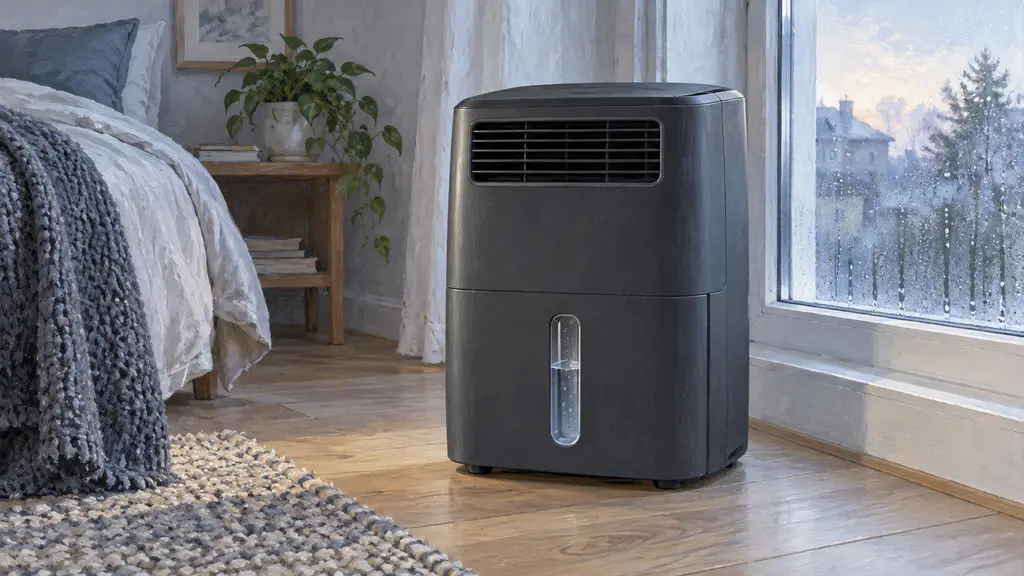
A dehumidifier pulls in humid room air, passes it over a cold coil (in most units) so the water vapor condenses into droplets, collects those droplets in a tank or drains them through a hose, then blows the drier air back into the room slightly warmer than before. The result: humidity in the room gradually drops until it hits the level you set on the unit.
The quick answer
A dehumidifier pulls in room air and passes it over cold coils (or through a moisture-absorbing material in a different type), the water vapor condenses or gets absorbed, the water collects in a tank or drains through a hose, and the drier air goes back into the room. Most units sold in Egypt use the compressor type, which suits our warm climate best.
Key points
- The core idea is simple: pull in damp air, remove the moisture, blow out dry air (dehumidifier definition from ENERGY STAR).
- The most common type uses refrigeration: cold coils condense water vapor, the same way it happens on an AC’s outdoor pipes.
- A second type uses a desiccant material that absorbs moisture like a sponge, with no cooling involved, and works better in cold climates where refrigeration is less efficient (background on desiccants from Britannica).
- The air that comes back out is slightly warm, not cold, because the heat pulled from the air during condensation gets returned to it before it leaves the unit.
- The tank needs emptying regularly, unless the unit is connected to a continuous drain hose.
How does the compressor type pull moisture out?
Most dehumidifiers sold in Egypt work on almost the same principle as an air conditioner: a fan pulls room air into the unit, that air passes over cold coils, and since warm air can hold more water vapor than cold air, the moment it touches that cold surface the water vapor condenses into small droplets, exactly like what happens on a cold glass of water on a hot day. Those droplets collect and drip into a tank under the unit, or drain out through a hose if the unit has a continuous drain outlet. The air left behind, now stripped of its moisture, passes over a second, warm coil inside the unit before it returns to the room, which is why it comes out slightly warm rather than cold.
The other type: desiccant drying
Not every dehumidifier works by refrigeration. A second type uses a desiccant material (like silica gel or something similar) that absorbs water vapor from the air directly, with no cooling stage at all, then the unit heats that material to release the absorbed water and collect it in a tank. This type is usually lighter and keeps working even in cold conditions where refrigeration loses efficiency, but it typically draws more power and runs louder. In Egypt, the compressor type is by far the more common and climate-appropriate choice, and it’s what you’ll find in most picks on the market.
Quick comparison: compressor or desiccant?
| Criterion | Compressor type | Desiccant type |
|---|---|---|
| How it works | Cold coils condense water vapor | Absorbent material soaks up moisture, then heats to release it |
| Best for | Warm climates like Egypt | Cold climates or winter use |
| Noise | Relatively quiet | Usually a bit louder |
| Power use | Generally more efficient | Usually higher |
| Availability in Egypt | The most common | Fairly rare |
Is it different from an air purifier?
A dehumidifier sometimes gets confused with an air purifier because both fall under “home air quality appliances,” but they do completely different jobs: a dehumidifier controls the water vapor level in the air, while a purifier filters out particles and dust. For the full breakdown, read dehumidifier vs air purifier.
A working example from our picks
Once you understand the principle, here’s a unit that applies it well: the Smart Compressor Dehumidifier at 30L/day from our picks uses the same refrigeration principle explained above, at a large capacity (30L/day) with remote app control, and it’s the most-reviewed model among all our picks, with thousands of positive reviews on Amazon.eg. Not every home needs that much capacity, but it’s a clear example of the mechanism running at full efficiency. Full details and its current price are in our guide to the best dehumidifier in Egypt.
See the Smart Compressor Dehumidifier 30L price on Amazon.eg ↗
Bottom line
A dehumidifier pulls in room air, strips out the water vapor (usually by refrigeration, or by a less common desiccant type), and returns slightly warm, dry air to the room, until humidity reaches the level you’ve set. Understanding this helps you tell it apart from other similarly-named appliances. If you keep confusing it with a humidifier, see dehumidifier vs humidifier, and if your unit has started smelling despite working fine, read why does a dehumidifier smell?. For the full buying criteria, head back to our guide on how to choose a dehumidifier, and browse our dehumidifiers section for every option.
Sources
- ENERGY STAR, “Dehumidifiers”, definition and mechanism of compressor and desiccant dehumidifiers: https://www.energystar.gov/products/dehumidifiers
- Britannica, “Silica gel as a desiccant”, background on absorbent materials and their use in drying air: https://www.britannica.com/science/silica-gel
This analysis is based on published information from ENERGY STAR (Dehumidifiers), Britannica (Silica gel as a desiccant).
Frequently asked questions
Does a dehumidifier heat up the room while it's running?
That's not its purpose, but the air it returns to the room comes out slightly warm rather than cold, because the heat pulled from the air during condensation gets returned to it before it leaves the unit. The temperature difference is small and nothing like an AC, but it's real and normal, not a sign of a fault.
Does a dehumidifier need water to work?
No, it's the opposite: the unit pulls water out of the air itself and collects it in a tank, so you never need to add water to it. All you need to do is empty the tank once it fills, or connect it to a continuous drain hose if the unit supports one.
What's the difference between the compressor type and the desiccant type?
The compressor type condenses water vapor on cold coils, and it's the better fit for warm climates like Egypt and the more common type on the local market. The desiccant type absorbs moisture directly with no cooling involved, and it works better in cold climates, but it usually draws more power and runs louder.
Should I keep the door and windows closed while the unit is running?
Yes, closing the door and windows lets the unit focus its effort on the air already in the room instead of constantly pulling in new humid air from outside. If the room stays open to another room or the outdoors, the unit will run longer and reach the target humidity more slowly.