
 UAE
UAE  Saudi Arabia
  USA
USA Food Processor Buying Mistakes You'll Regret Later
We may earn a commission from purchases through our links, at no extra cost to you. How we choose · Disclosure.
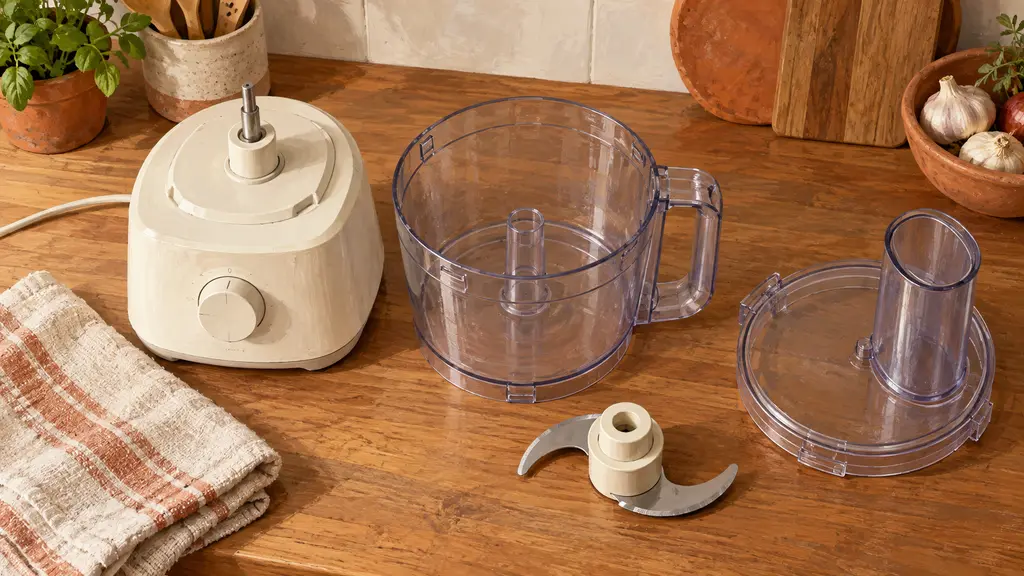
The most common food processor buying mistake is focusing on the wattage number or the price alone, and falling into the trap of a bowl smaller than you actually need or a brand with no local agent in Egypt. These mistakes don’t show their cost until weeks of use in, when you find yourself running two batches per recipe or nobody can repair your machine. Avoiding them upfront is far cheaper than dealing with them later.
The quick answer
The most common mistake is judging a food processor by wattage alone or price alone, without calculating the bowl capacity you actually need, the attachments you’ll really use, and whether the brand has a local agent and warranty in Egypt. The fix isn’t always buying the most expensive option, it’s calculating your actual needs first: how many people you cook for, what kind of tasks you do, and whether the brand has local service.
Key takeaways
- The wattage number alone isn’t a sufficient measure of performance, bowl capacity, blade quality, and base stability matter just as much, per the food processor definition from Britannica.
- A bowl smaller than you actually need sets you back a step, forcing you to run two or three batches instead of one.
- A large attachment count isn’t an automatic advantage, if you won’t use them they’re just extra storage space and a higher price for no real benefit.
- The warranty and local agent matter over the long run, especially for a machine with a motor and parts that may eventually need replacing (background on warranties from FTC).
- Comparing on price alone loses the real value, which is the relationship between what you pay and what you actually get.
Mistake one: focusing on the wattage number alone
Many people settle their buying decision by comparing wattage numbers the way they’d compare any other spec: higher means better. The problem is that wattage describes motor power, not overall performance, since blade quality and how stable the base is matter just as much, especially for kneading and heavy tasks. A well-designed 800W processor can outperform a 1000W one with weak blades. Look at the type of tasks you’ll actually do, not the number alone.
Mistake two: choosing a bowl smaller than you actually need
A smaller bowl costs less, and that tempts a lot of buyers. But if your household is three people or more and you cook full meals, a small bowl means running two or three batches per recipe, which costs more time than what you saved on price. Base your decision on your household size and the type of tasks (light chopping versus kneading and big batches) before settling on a capacity.
Mistake three: ignoring which attachments you’ll actually use
Some buyers get impressed by a big attachment count and assume more is better, but tools you won’t actually use just take up storage space and raise the price with no real benefit. Before buying, make a short list of the tasks you actually do in your kitchen (chopping, grating, kneading, juicing), then look for a model that covers exactly that without paying for extras.
Mistake four: buying without confirming the warranty and local agent in Egypt
A machine with a motor, plastic parts, and blades will eventually need a spare part, and buying a brand with no local agent means you might struggle to repair something as simple as the bowl or the blade, turning a small issue into a dead machine. Ask about the warranty length, whether it covers the motor, and where the nearest service center is, before you pay, not after.
Table: common mistake versus the right call
| Common mistake | The right call |
|---|---|
| Judging by wattage alone | Also compare blade quality and base stability |
| A bowl smaller than you need to save on price | Base it on your household size and actual cooking |
| Choosing the most attachments | List your actual tasks and compare against that |
| Ignoring the warranty and agent | Ask about warranty and spare parts before buying |
| Comparing on price alone | Compare on value: expected lifespan plus warranty plus tasks you’ll use |
A practical pick that avoids these mistakes
If you want a model that sidesteps these common mistakes from the start, a practical example from our shortlist: the Kenwood FDP65.400WH has a 3L bowl that covers an average household without extra batches, 1000W backed by solid build rather than an empty wattage number, and 7 genuinely useful tools for chopping, grating, and kneading rather than excess for its own sake, plus agent and service widely available in Egypt. We didn’t rank it for being the cheapest or having the most attachments, we ranked it because every decision behind it is based on balance, not a single number. If you want to compare capacity in detail before deciding, read food processor size: how many litres do you need?, and if your budget is tight see the best budget food processor in Egypt.
Bottom line
The most common food processor buying mistakes all come from judging by a single number instead of the full picture: wattage alone, price alone, or attachment count alone. Calculate your actual needs from your household size and the tasks you do, and confirm the warranty and agent before you pay. Check our full guide on how to choose a food processor for details on every criterion, and see all our picks at the best food processor in Egypt. And if your current processor isn’t working right, read food processor not working: what to check before assuming you need a new one.
Sources
- Britannica, “Food processor”, definition of the food processor and the criteria for comparing models: https://www.britannica.com/technology/food-processor
- FTC, “Consumer guide to warranties”, background on product warranties and their role in a buying decision: https://consumer.ftc.gov/articles/warranties
This analysis is based on published information from Britannica (Food processor), FTC (Consumer guide to warranties).
Frequently asked questions
What's the most common mistake people make buying a food processor?
Focusing on the wattage number alone and treating it as the only measure of quality. Wattage gives you an idea of motor power but not the full picture, since bowl capacity, blade quality, and how stable the base is matter just as much. A processor with higher wattage and weak build can lose out to one with lower wattage and better design.
Is buying a smaller bowl to save money a mistake?
It can be, if you haven't actually calculated your household's needs. A bowl smaller than what your home needs means running two or three batches per recipe instead of one, which costs more time than the money you saved. Base your decision on your household size and how you actually cook, not the price alone.
Should I buy the food processor with the most attachments?
No. A large number of attachments isn't automatically a benefit if you won't use them, it just takes up extra storage space and raises the price for no real gain. List the tasks you actually do in your kitchen first, then look for a model that covers them without paying for tools that'll sit in the box.
Does the warranty and local agent really matter when buying a food processor?
Yes, and it's one of the most overlooked mistakes. A machine with a motor and plastic parts will eventually need a replacement piece, and buying a brand with no local agent means a simple broken part can be hard to find or repair. Check the warranty length and spare-part availability before buying, not after.