
 UAE
UAE  Saudi Arabia
  USA
USA How to Clean a Food Processor Without Dulling the Blades
We may earn a commission from purchases through our links, at no extra cost to you. How we choose · Disclosure.
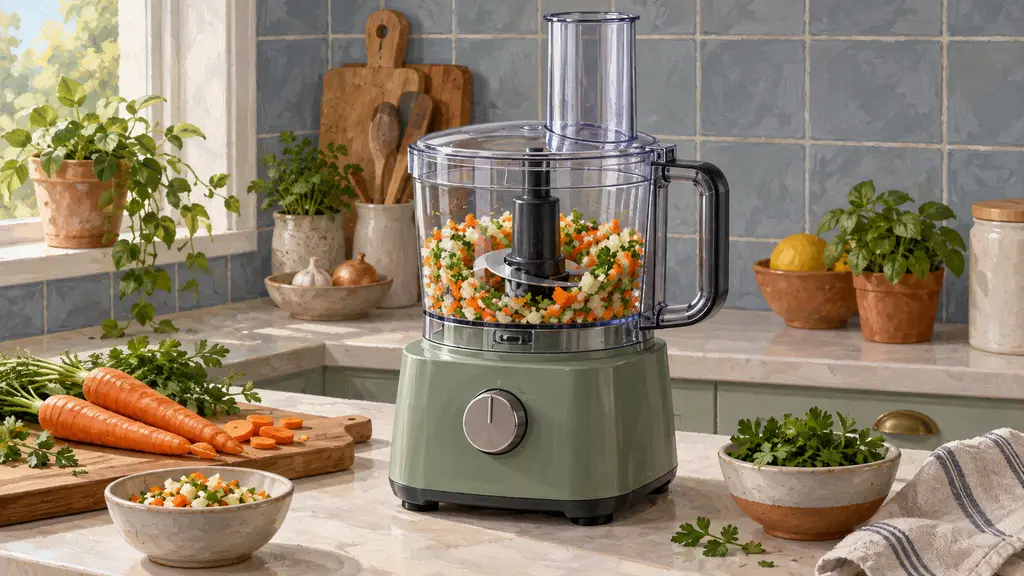
The bowl and blades on a food processor get dirty faster than most people expect, and a quick rinse often misses the rubber gasket around the lid or the base of the blade, which is exactly why smells linger and blades dull faster than they should. The good news is that cleaning it properly only takes a few minutes once you know how, and what to avoid.
The quick answer
Wash the bowl, lid, and blade after every use with a soft sponge or small brush and regular dish soap, and stay away from steel wool, which scratches the blade and dulls its edge. The rubber gasket under the lid is the most common source of smell, so clean it well and dry it before reassembling. Most plastic parts are labeled dishwasher-safe, but the metal blade is better washed by hand.
Key takeaways
- A food processor works with removable metal blades, which means leftover food settles around the blade mount and the drive shaft more than any other part (food processor definition from Britannica).
- The blades are usually stainless steel, which resists rust but doesn’t stop scratches from steel wool or corrosion from poor storage (stainless steel background from Britannica).
- The rubber gasket under the lid is the top source of smell, because it traps moisture and food residue that a quick wash rarely reaches.
- Scrubbing with steel wool or too much force shortens the blade’s life, not just its finish.
- Never submerge the motor body in water, because it houses an electrical circuit, so wipe it with a damp, well-wrung cloth only.
Cleaning steps after every use
- Unplug the unit before doing any cleaning step, no matter how small.
- Remove the bowl, lid, and blade carefully, especially the blade since it’s sharp on both edges.
- Tip leftover food into the bin before washing so it doesn’t clog the drain or make the wash harder.
- Wash with a soft sponge and regular dish soap, holding the blade by the center hub, not the sharp edge.
- Clean the rubber gasket under the lid with a small brush that reaches the tight corners.
- Dry everything well before reassembling or storing, so the metal blade doesn’t rust.
The bowl and blades: do and don’t
| Situation | Do | Don’t |
|---|---|---|
| Scrubbing the blade | Small brush or soft sponge | Steel wool or a rough scourer |
| Holding the blade | By the center hub | By the sharp edge |
| Stuck-on food | Soak in warm water first | Chip it off with a knife or metal tool |
| Rubber gasket | Clean it with a small brush every time | Ignore it for weeks |
| Storage | Dry and away from moisture | Wet, or stacked with no protection |
The golden rule: if you’re scratching the blade or leaving moisture on it, you’re shortening its life. Metal blades stay sharp for years if handled right.
Removing stubborn smells and stains
If your food processor has developed a smell, the cause is usually leftover food or grease trapped somewhere a normal wash doesn’t reach. Try these steps in order:
- Deep wash the bowl and lid in warm soapy water, soaking for 15 minutes if the residue is set in.
- The rubber gasket: remove it if your model allows, and clean both sides with a small brush, since it traps damp residue that’s hard to reach while it’s installed.
- Staining foods (like carrot or turmeric): soak the plastic parts in warm water with a little baking soda for 30 minutes, and the stain fades without needing abrasive cleaners.
- Stubborn odor: wash the bowl with warm water and a little lemon or diluted white vinegar, then let it air dry fully in the open before reassembling.
Never mix vinegar with bleach or any chlorine-based cleaner - the combination releases toxic gases. Use one cleaner at a time and rinse thoroughly between products.
Avoid spraying air fresheners or harsh cleaners inside the bowl, because the goal is to remove the source of the smell, not mask it.
Dishwasher-safe parts versus hand-wash-only parts
- The bowl, lid, and plastic chopping tools are usually labeled dishwasher-safe in the manufacturer’s manual, meaning they can technically handle the dishwasher.
- The metal blades are better washed by hand even if the model says they’re dishwasher-safe, because bumping into other items in the dishwasher dulls their edge quickly.
- The motor body must never go in the dishwasher or be submerged in water at all, so wipe it from the outside with a damp, well-wrung cloth only.
Simple tools that make cleaning easier
If cleaning feels like a chore every time, a small set of cleaning brushes (like an old toothbrush or a brush made for tight spaces) reaches the corners around the blade shaft and the rubber gasket faster than a regular sponge, saving you time without changing your basic wash routine. You don’t need to buy anything specific to clean properly, but a small tool like this makes the corners that get skipped much easier to reach.
A practical example of a design that’s easy to take apart and clean from our shortlist: the Kenwood FDP65.400WH with its removable parts and roomy bowl reaches every corner easily at washing time, which is part of why it tops our guide to the best food processor in Egypt. You’ll find its current price and the Noon link in the card below.
When to stop and call a technician
- A stubborn smell remains after the bowl, lid, blade, and gasket are cleaned and dried.
- The gasket is cracked or still traps residue after it is removed and cleaned.
- The blade is damaged or no longer sits correctly after reassembly.
- Residue remains in a part that cannot be removed or reached safely.
Stop using the food processor and have it checked by a qualified technician before using it again.
Bottom line
Cleaning a food processor isn’t a luxury, it’s what keeps the blades sharp and the machine lasting. Wash the bowl, lid, and blade after every use, hold the blade by the center hub, clean the rubber gasket regularly so smells don’t build up, and stay away from steel wool. The motor body must never be submerged in water. If you’re still deciding whether to buy a food processor at all, read the best food processor in Egypt or is a food processor worth it?. If budget is your priority, see is a cheap food processor good enough?. Browse our food processors section to compare every option.
Sources
- Britannica, “Food processor”, definition of the food processor and the removable metal blades it works with: https://www.britannica.com/technology/food-processor
- Britannica, “Stainless steel”, background on rust resistance in metal blades and why they still corrode with poor care: https://www.britannica.com/technology/stainless-steel
This analysis is based on published information from Britannica (Food processor), Britannica (Stainless steel).
Frequently asked questions
How often should I clean my food processor?
The bowl, blade, and lid should be washed after every use so leftover food doesn't dry on and stick. The base and motor only need a quick wipe from the outside after each use, with a deeper clean of the rubber gasket and the blade mount once a week or two depending on how often you use it.
Can I put the food processor bowl in the dishwasher?
The bowl, lid, and plastic tools are usually labeled dishwasher-safe in the manufacturer's manual. But the metal blades are better washed by hand so they stay sharp and don't knock against other items in the dishwasher, which extends their life.
How do I get rid of a bad food processor smell?
The smell is usually caused by leftover food or grease trapped in the rubber gasket under the lid or around the blade mount. Take apart the bowl and lid and soak them in warm soapy water, clean the gasket well with a small brush, and let the parts air dry fully before reassembling.
Can I use steel wool to clean the blades?
No. Metal scourers can scratch the blade edges and dull them over time, and they can also cut your hand while you scrub a sharp edge. Use a small brush or soft sponge with regular dish soap, and hold the blade by the center hub, not the sharp edge, while washing.
How do I care for the blades so they stay sharp?
Wash them by hand instead of the dishwasher, dry them fully before storing so they don't rust, and don't stack them on top of other tools with no cover protecting the edge. If chopping stops feeling as clean as before, the blade needs replacing, not just cleaning.