
 UAE
UAE  Saudi Arabia
  USA
USA Water Dispenser Buying Mistakes to Avoid
We may earn a commission from purchases through our links, at no extra cost to you. How we choose · Disclosure.
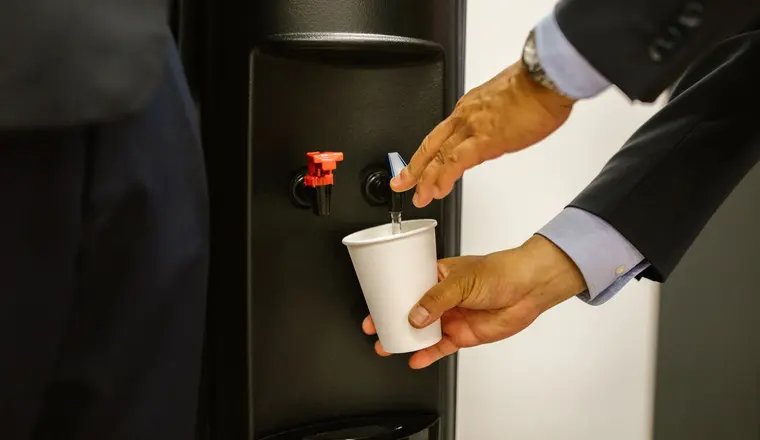
The most common water dispenser buying mistake is picking by price alone without comparing your actual use to the type of unit, so you end up buying a cheap bottle pump for a full household that needs hot and cold water daily, or overpaying for a premium dispenser whose footprint won’t fit your kitchen at all. All of these mistakes are avoidable with five minutes of comparison before you pay.
The quick answer
The biggest water dispenser buying mistakes are: picking by price instead of matching the type to your actual use, ignoring the exact tap types, skipping the brand’s service reputation, and forgetting to measure floor and vertical space. Before you commit, ask yourself: is my use daily for a full household or light? Do I actually need hot water? Does this brand have widespread service? And does my space actually allow it?
Key takeaways
- Picking the lowest price without matching it to actual use is the most common mistake, and most complaints trace back to a mismatched product, not a fault in the unit itself.
- Not every two-tap dispenser means hot and cold, some models are cold and normal only with no hot water.
- Brand service and spare parts genuinely matter long-term, not just at the moment of purchase.
- Floor and vertical space need to be measured before buying, not after.
- Neglecting a maintenance plan from day one leaves owners surprised by avoidable problems a year or two in.
Mistake one: picking by price instead of actual use
The single most common mistake is seeing the lowest price and committing without a real comparison. A cheap bottle pump is an excellent fit for light use or a small apartment, but it has no cooling or heating, so if your household needs hot tea water and cold drinking water daily, you’ll likely end up buying a real dispenser soon after, meaning you paid twice instead of once. Ask yourself first: is my use heavy and daily, or light and temporary? That answer determines the right category from the start.
Mistake two: assuming every two-tap dispenser has hot and cold
Not every two-tap model has the same combination. Some offer only cold and normal water with no hot tap at all, like the Fresh FW-17 in our picks. If you assume any two-tap dispenser automatically gives you hot water, you may discover after buying that you still need the kettle for tea and coffee. Confirm the exact type of each tap before committing, not just the tap count.
Mistake three: ignoring brand service and spare parts
It’s easy to focus on specs and price and forget to ask the more important question: if the unit breaks a year in, will you find service and parts easily or not? We publish nothing about any brand’s service network in Egypt, because we have not verified one ourselves. Ask the seller what warranty and service cover the exact model, since that is what matters long-term, not just on purchase day.
Mistake four: ignoring loading type and who actually changes the bottle
Many people buy a top-load model because it’s cheaper without thinking about who will actually change the 19kg bottle each time. If no one strong at home does that comfortably, the price gap between top-load and bottom-load becomes a comfortable investment rather than a luxury. See the full breakdown in bottom-load vs top-load water dispenser.
Mistake five: forgetting to measure space before buying
A common mistake is buying a top-load model without confirming there’s enough vertical clearance to lift the bottle, especially if there’s a cabinet right above the spot. Or buying a real dispenser at all without available floor space, then discovering it won’t fit the kitchen. Measure the space before you buy, not after, and check what size water dispenser do I need for a small apartment if your kitchen is tight.
Mistake six: treating the dispenser as “install it and forget it”
A water dispenser needs regular maintenance, especially descaling because of Egypt’s hard water. Anyone who skips this step gets surprised a year or two in by flow or heating problems that were easily avoidable. Get the full details in how long does a water dispenser last.
Table: the mistake, its result, and the fix
| Mistake | Result | Fix |
|---|---|---|
| Picking by price without matching to actual use | Buying a bottle pump for a full household, or the reverse | Define your actual use before comparing prices |
| Assuming every two-tap model means hot and cold | Discovering after purchase that there’s no hot water | Confirm each tap type by name, not just the count |
| Ignoring warranty and service | Trouble finding parts or service a year in | Ask the seller what warranty and service cover the exact model |
| Ignoring who actually changes the bottle | Repeated daily effort that could’ve been avoided | Compare bottom-load vs top-load before committing |
| Forgetting to measure space | The unit doesn’t fit the kitchen or needs clearance you don’t have | Measure floor and vertical space before buying |
| Skipping a maintenance plan | Flow and heating problems a year or two in from limescale | Start a regular descaling schedule from day one |
So what should I pick without repeating these mistakes?
The practical approach is answering four questions before you commit: is my use daily and heavy or light? Do I actually need hot water? Do I have enough floor space? And who will change the bottle? If your answers point toward a full-featured real dispenser, the Tornado 3-Tap Bottom-Loading dispenser at ≈ 11,500 EGP was the unit that closed off most of the mistakes above in one go: full daily use (hot, cold, normal) and a 4.1 average from 77 ratings. Its featured offer was unavailable when we re-checked on 23 August 2026, which is itself the seventh mistake to avoid: buying from an old link instead of checking the offer is live. The current picks are in our guide to the best water dispenser in Egypt.
The featured offer was unavailable at the last update.
Bottom line
Most water dispenser buying mistakes trace back to one thing: a decision made on price or looks instead of matching the type to your actual use and space. Check the exact tap types, the brand’s service reputation, who will change the bottle, and the available space before you commit, and start a maintenance plan from day one. For every criterion in full detail read our how to choose a water dispenser guide, and compare water dispenser prices in Egypt before you pay. To browse every option, see our whole water dispensers section.
This analysis is based on published information from Amazon.eg.
Frequently asked questions
What's the biggest mistake people make buying a water dispenser?
The most common mistake is picking by price alone without matching the product type to actual use. Someone using a dispenser daily for a full household buys a cheap bottle pump to save money, then discovers it has no cooling or heating and won't cover their daily needs.
Should I check the number of taps before buying, or is any two-tap dispenser the same?
You should absolutely confirm the exact tap types, because not every two-tap dispenser means hot and cold. Some models offer only cold and normal water with no hot tap at all, like the Fresh FW-17. If you need hot water daily for tea or coffee, confirm the model actually has a hot tap before committing.
Does the brand actually matter for a water dispenser?
Yes, and it's a common mistake to focus on specs and forget about the service network and spare parts. We publish nothing about any brand's service network in Egypt, because we have not verified one ourselves, so ask the seller what warranty and service cover the exact model, since that is what makes the difference once the unit needs a repair a year or two in.
What space do I need to measure before buying?
Measure a small floor footprint next to a power outlet, not counter space, since most real dispensers need a spot to stand on the floor. A common mistake is buying a top-load model without confirming there's enough vertical clearance to lift the bottle, especially if there's a cabinet right above the spot.