
 UAE
UAE  Saudi Arabia
  USA
USA What Size Dehumidifier Do I Need for My Home?
We may earn a commission from purchases through our links, at no extra cost to you. How we choose · Disclosure.
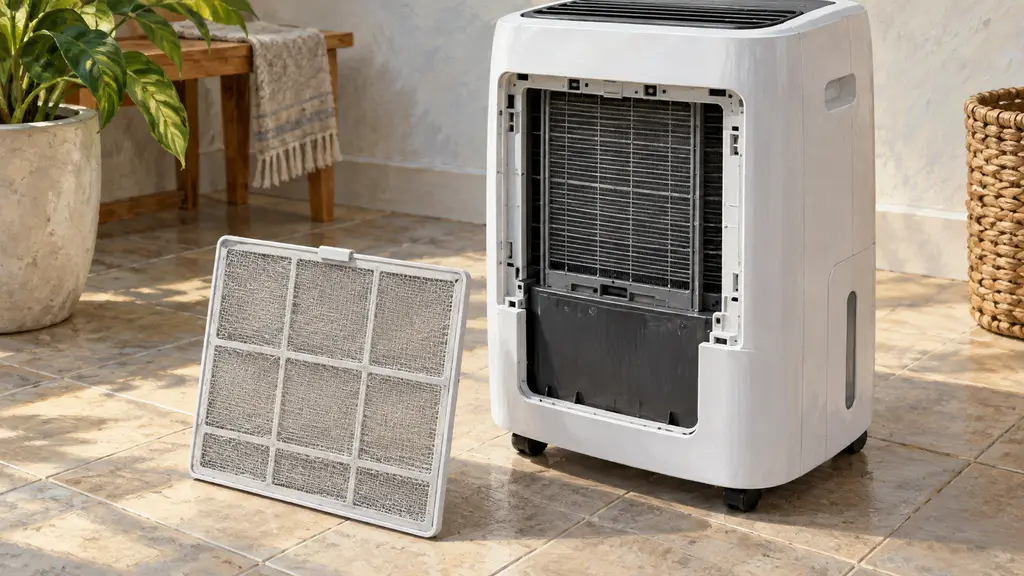
Choosing a dehumidifier’s capacity comes down to two things: the size of the space and how humid it gets. A single room, a closet, or a small storage space is covered by a compact unit. A medium to large apartment, or a home near the coast with high humidity year-round, needs a large-capacity unit (20L to 30L a day). Pick a unit smaller than you actually need, and it will keep running without ever getting the job done.
The quick answer
A single room, closet, or small storage space is covered by a compact unit from the small capacity class. A full apartment, medium to large, or a home with high humidity year-round like a coastal property needs a large-capacity unit (20L to 30L a day). The practical rule: if you’re not sure, pick a slightly larger capacity, because an undersized unit will run constantly without actually solving the problem.
Key takeaways
- A dehumidifier’s capacity is measured in liters pulled from the air per day, and the bigger the space or the higher the humidity, the more capacity you need (dehumidifier definition from ENERGY STAR).
- Compact units suit small, enclosed spaces: a bedroom, a closet, a bathroom, a small storage room.
- Large compressor units suit full apartments, or homes with high humidity year-round, like properties near the coast.
- Humidity level matters just as much as size: the same footprint can need more capacity if it stays humid consistently (background on relative humidity from US EPA).
- An undersized unit runs constantly without results, which burns more power and shortens the unit’s life without ever solving the problem.
One room, a closet, or a storage space: the compact class is enough
If your problem is localized to one small, enclosed space, like a damp closet, a poorly ventilated bathroom, or a small storage room, a compact unit is more than enough. These units are built for a limited footprint, and buying a large-capacity unit here is overkill on price and size with no real added benefit, since the unit will never actually use its full capacity in a space that small.
A medium to large apartment: you need the large class
If you want one unit to cover a full apartment or more than one room, the compact class won’t cut it, and you’ll end up running it constantly without a real result. The large class (20L to 30L a day) is built for these spaces, and it reaches a target humidity level and stops, rather than running non-stop. If the home is near the coast or stays humid year-round, the higher-capacity tier (30L) gives you more margin instead of buying a unit right at the edge of what you need.
Simple table: space size and the right capacity
| Space type | Suitable class | Note |
|---|---|---|
| Closet or small storage room | Compact (30oz class or smaller) | Only covers a limited, enclosed space |
| One bedroom or a single office | Compact to small-medium | Depends on how humid the room actually is |
| Small to medium apartment | Medium (around 20L/day) | Covers more than one room at once |
| Medium to large apartment | Large (20L to 30L a day) | Best for covering the whole home with one unit |
| Home near the coast or humid year-round | Highest capacity (30L/day) | More margin for constant humidity |
This table is a good general starting point, but your actual humidity level can shift the right tier, so if you’re unsure, pick the larger class.
The mistake of buying a unit smaller than you need
The most common mistake is buying a small unit because it’s cheaper, then finding out it runs all day without reaching a real result. In that case the unit burns more power over time, its lifespan shortens from constant running, and you still have the same humidity problem. If you’re not sure of the exact size, it’s better to pick a slightly larger class, since a unit a bit bigger than needed runs less and gets results faster, unlike an undersized one.
The unit we’d recommend if your space is a full apartment
If you’ve decided you need large capacity to cover the whole home, the Smart Compressor Dehumidifier at 30L/day is our top pick. We didn’t pick it for being the cheapest, we picked it because it’s the biggest drying capacity on our list with remote app control, and it’s the most-reviewed model among our picks, with thousands of positive reviews on Amazon.eg, reassuring for real use in larger spaces. Its one trade-off is that it’s the priciest unit on the list, but if you need one unit for the whole home without worrying about running short on capacity, it’s the most trusted pick in our guide to the best dehumidifier in Egypt.
See the Smart Compressor Dehumidifier 30L price on Amazon.eg ↗
Bottom line
Picking the right size starts with the space (one room or a full apartment) and how humid it gets (light and seasonal or constant year-round). Small enclosed spaces are covered by the compact class, and full apartments or coastal homes need the large class at 20L to 30L a day. If you’re unsure, pick the larger class, since an undersized unit runs constantly without results. Still not sure a dehumidifier is worth buying at all? Read is a dehumidifier worth it?, or compare it against your AC in AC dry mode vs a dehumidifier. Check our guide on how to choose a dehumidifier for more detail, or browse our full dehumidifiers section.
Sources
- ENERGY STAR, “Dehumidifiers”, definition of the dehumidifier and how its capacity is measured in liters removed per day: https://www.energystar.gov/products/dehumidifiers
- US EPA, “Controlling moisture and relative humidity at home”, background on relative humidity and how it affects how much drying capacity a space needs: https://www.epa.gov/mold/what-are-main-ways-control-moisture-your-home
This analysis is based on published information from ENERGY STAR (Dehumidifiers), US EPA (Controlling moisture and relative humidity at home).
Frequently asked questions
What capacity dehumidifier does a single bedroom need?
A single room, a closet, or a small storage space is well covered by a compact unit from the small capacity class, without paying for drying capacity you'll never use. The large-capacity units (20L to 30L a day) are built for bigger spaces, so using one in a single room is overkill on both price and size.
How many units does a full apartment need?
Usually one large-capacity unit (like a 30L/day model) is enough for a medium to large apartment if you place it centrally and leave interior doors slightly open so air can circulate. If the apartment is very large or has more than one separate source of humidity (like two bathrooms far apart), you might need a second, smaller unit for the far side.
What happens if I buy a unit that's smaller than I actually need?
The unit will keep running non-stop without ever reaching the target humidity level, because its capacity isn't enough for the space or the humidity level involved. The result is higher power use and a shorter unit lifespan without actually solving the problem, which ends up worse than paying a bit more upfront for the right size.
Does humidity level matter as much as room size when picking capacity?
Both matter together. The same size room can need a bigger capacity if it stays humid year-round, like homes near the coast, compared to a relatively dry location. If you're not sure, it's better to pick a slightly larger capacity class than you think you need, rather than a unit that keeps running without results.