
 UAE
UAE  Saudi Arabia
  USA
USA Water Dispenser Smells: Tank Cleaning and Prevention
We may earn a commission from purchases through our links, at no extra cost to you. How we choose · Disclosure.
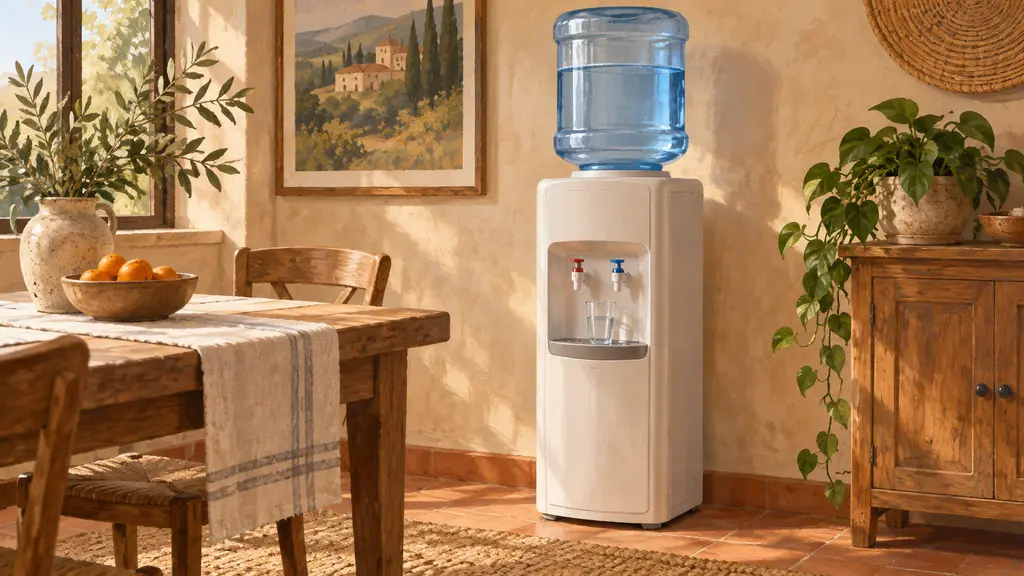
A bad water dispenser smell is usually not a fault in the unit at all, it’s bacteria and microscopic algae building up inside the tank and tubing, because a warm, dark, constantly damp tank is ideal for microbes to grow in. The fix isn’t a fragrance that masks the smell, it’s cleaning the tank properly with a simple solution and a regular schedule.
The quick answer
A bad water dispenser smell is usually caused by bacteria and algae building up inside the tank or tubing from warmth and moisture, not a manufacturing fault. The real fix: unplug the dispenser, drain the tank fully, wash it with a diluted white vinegar solution, and rinse well before fitting a new bottle. Repeat this every month or two, and keep the dispenser away from direct sunlight since heat speeds up bacterial growth.
Never mix vinegar with bleach or any chlorine-based cleaner - the combination releases toxic gases. Use one cleaner at a time and rinse thoroughly between products.
Key takeaways
- A warm, dark tank is an ideal environment for bacteria and algae, and that’s the underlying cause behind most water dispenser smells (background on microbial communities from US CDC).
- The smell gets worse if the unit sits unused for a long stretch, since stagnant water gives microbes more time to multiply.
- Cleaning with a diluted vinegar solution every month or two is the actual fix, not air fresheners or artificial scents.
- Placing the dispenser near sunlight or a heat source speeds up the problem, since heat helps bacteria grow faster inside the tank.
- The smell is a cleaning signal, not proof of immediate danger, but you should still take it seriously and clean the tank as soon as you notice it.
The real cause behind a water dispenser’s smell
A water dispenser has an internal tank that stays slightly warm because of the heating element inside it, and combined with constant darkness and moisture, that creates an environment perfectly suited to bacteria and microscopic algae. These microbes don’t form overnight, they build up gradually every time the tank goes without a full clean for a long stretch. The water bottle itself can also contribute if it’s left open or nearly empty and sitting for a while, since stagnant water gives bacteria more time to grow.
Tank cleaning steps that actually remove the smell
- Unplug the dispenser and remove the current bottle.
- Drain the tank completely of any remaining water.
- Add a diluted white vinegar solution (roughly half a cup of vinegar per liter of water) into the tank.
- Let it sit for half an hour to an hour so the solution has time to work on the interior walls.
- Scrub the walls with a soft brush or sponge if you can reach them, to remove any slimy buildup.
- Rinse with clean water several times until the vinegar smell is completely gone.
- Dry the tank well before fitting a new bottle.
Causes and fixes for a water dispenser smell
| Cause | Fix |
|---|---|
| Bacteria and algae buildup in the tank | Full clean with a diluted vinegar solution every month or two |
| A half-empty bottle sitting for a long stretch | Replace it as soon as it’s near empty, don’t leave it standing |
| The dispenser is near sunlight or a heat source | Move it to a shaded spot, heat speeds up bacterial growth |
| Regular cleaning skipped for months | Get back on a regular schedule instead of waiting for the smell to appear |
| A plastic or rubber smell on a brand-new unit | Usually goes away after the first few refills and normal use |
After cleaning: how to keep the smell from coming back
Once you’ve cleaned the tank and removed the smell, the step that actually prevents it from returning is consistency: a cleaning schedule every month or two depending on how much you use it, a spot away from direct sunlight, and not leaving a half-empty bottle sitting on it unused for a long stretch. If you want an extra layer of protection between cleanings, deodorizing or sanitizing kits and tablets designed for water dispensers also exist on the market and can help keep things fresh longer, but the core fix is still the regular cleaning itself, not any product that just masks the problem instead of fixing it at the root.
A water dispenser designed to make cleaning easier from the start
If you’re still choosing a dispenser, the design genuinely affects how easy it is to reach the tank and clean it. The example we used from our shortlist, the Tornado 3-Tap Bottom-Loading dispenser at ≈ 11,500 EGP, averaged 4.1 from 77 ratings, a reassuring sign about the long-term experience, but its featured offer was unavailable when we re-checked on 23 August 2026, so it is a reference here rather than a buying pick. The dispensers with a live offer are in our guide to the best water dispenser in Egypt.
The featured offer was unavailable at the last update.
When to stop and call a technician
- The smell persists after the tank is cleaned with diluted vinegar and rinsed several times.
- Slimy buildup returns quickly after a complete tank clean.
- An odd taste remains after the vinegar smell has been fully rinsed away.
- The tank or tubing cannot be reached for the cleaning steps described above.
Stop using the water dispenser and have it checked by a qualified technician before using it again.
Bottom line
A bad water dispenser smell comes from bacteria and algae building up in a warm, dark environment, not a fault in the unit. Clean the tank with a diluted vinegar solution every month or two, keep the dispenser away from sunlight, and don’t leave a half-empty bottle sitting on it for a long stretch. If you also want to know how long a water dispenser lasts so you can extend its life after cleaning, or you’re torn on loading type, read bottom-load vs top-load water dispenser. Compare water dispenser prices in Egypt, or check our how to choose a water dispenser guide if you’re still shopping, and browse our whole water dispensers section to see every option.
Sources
- US CDC, “Biofilm growth in stagnant water systems”, background on the microbial communities that form on damp surfaces like water tanks: https://www.cdc.gov/control-legionella/php/guidance/building-water-system.html
- ENERGY STAR, “Water coolers”, background on the water dispenser and its operating principle: https://www.energystar.gov/products/water_coolers
This analysis is based on published information from US CDC (Biofilm growth in stagnant water systems), ENERGY STAR (Water coolers).
Frequently asked questions
What actually causes a water dispenser to smell?
The most common cause is bacteria and microscopic algae building up inside the tank and tubing, because the tank stays warm, dark, and constantly damp, ideal conditions for microbes to grow and produce a bad smell over time. An empty bottle sitting for a while or a tank that hasn't been cleaned in a long time speeds up the problem.
Does the smell mean the water isn't safe to drink?
The smell itself is a sign you need to clean the tank, but it isn't definitive proof the water is unsafe. What matters is taking the smell seriously and doing a full tank clean as soon as you notice it, and drinking from another source until the cleaning is done.
How exactly do I clean a water dispenser tank?
Unplug the dispenser and drain the tank completely, add a diluted white vinegar solution into the tank and let it sit for half an hour to an hour, scrub the interior walls with a soft brush if you can reach them, then rinse with clean water several times until the vinegar smell is completely gone before fitting a new bottle.
How do I stop the smell from coming back?
Stick to a regular cleaning schedule every month or two depending on how much you use it, keep the dispenser away from direct sunlight since heat speeds up bacterial growth, and don't leave a half-empty bottle sitting on it unused for a long stretch.