
 UAE
UAE  Saudi Arabia
  USA
USA Is a Food Processor Worth It If You Already Own a Blender?
We may earn a commission from purchases through our links, at no extra cost to you. How we choose · Disclosure.
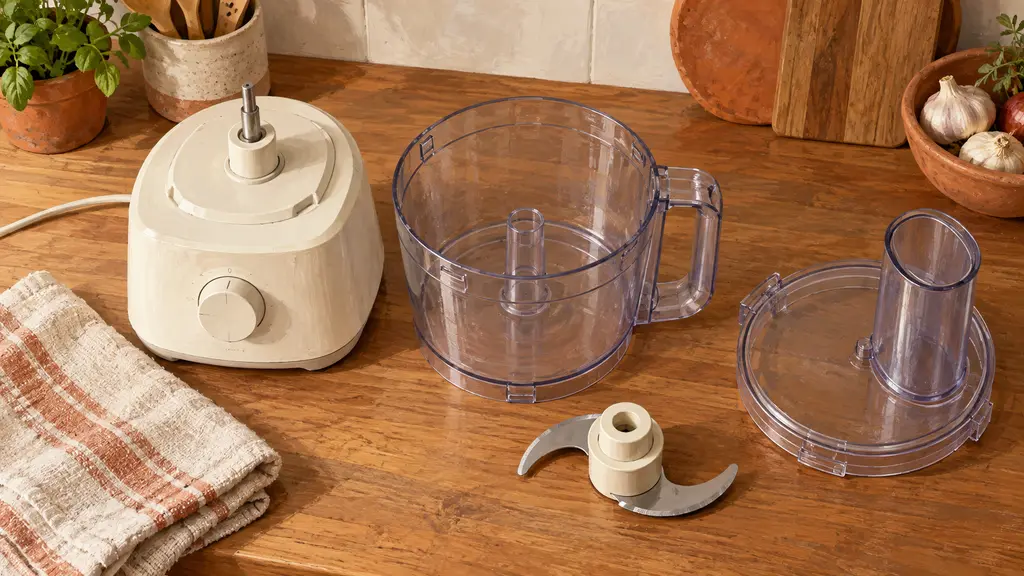
Short answer: a food processor is worth it if you chop, grate, or knead often during the week, because it saves the hand-chopping time that neither a blender nor a stand mixer replaces. But if your kitchen use is simple, or your blender and mixer already cover your needs, you can hold off until hand-chopping starts feeling like it takes more time than it should.
The quick answer
A food processor is worth it if you regularly chop, grate, or knead, because a blender excels at liquids, not semi-dry tasks, and a stand mixer focuses on dough, not chopping. If you cook for one or two people with simple meals, you can likely skip it. The decision isn’t about “owning one more gadget”, it’s about how many hours of hand-chopping you’d actually save.
Key takeaways
- A food processor stands out for its interchangeable blades and discs over a wide bowl, which makes it better suited to semi-dry tasks like chopping, grating, and kneading (food processor definition from Britannica).
- A blender is built primarily for liquids, so it excels at juices, smoothies, and pureed soup but struggles with dry or stiff quantities (blender definition from Britannica).
- A stand mixer focuses on dough, and lacks the range of chopping and grating attachments a food processor offers.
- The real value of a food processor is the time it saves, not a function no other appliance offers at all.
- Light kitchen use (one or two people) may not need the appliance at all if hand-chopping isn’t a real burden.
The real difference between the three appliances
Many people assume a blender or stand mixer can “do the same job”, but each is actually built for a different task:
- Blender: excels at liquids and thin mixtures, smoothies, juices, and pureed soup, but struggles or gives uneven results with dry chopping or stiff dough.
- Stand mixer: excels specifically at dough, especially bread and pastry dough that needs long, continuous kneading, but isn’t built for chopping or grating.
- Food processor: excels at chopping, grating, and light kneading over semi-dry quantities, saving significant time on daily prep like chopping onions and vegetables or mincing meat, even though it isn’t a full replacement for a blender with liquids.
For more detail specifically on the blender comparison, see our food processor vs blender guide.
Task comparison: who actually does what
| Task | Blender | Food processor | Stand mixer |
|---|---|---|---|
| Juices and smoothies | Best | Weak | N/A |
| Pureeing soup | Best | Fair | N/A |
| Chopping vegetables and fruit | Weak | Best | N/A |
| Grating cheese or vegetables | N/A | Best | N/A |
| Mincing meat | N/A | Good (with the right blade) | N/A |
| Bread and pastry dough | N/A | Good for small batches | Best for large, continuous batches |
When it’s worth buying, and when to wait
It’s worth buying if you find yourself chopping onions, garlic, and vegetables almost daily, mincing meat at home, or prepping salads and stuffed vegetables in quantities that take a long time by hand. In those cases, a food processor saves hours a week, not just a small convenience.
It’s worth waiting if your kitchen use is light (one or two people), your meals don’t require much chopping, or your storage space is very limited and an extra appliance would be a real burden. In that case, a decent knife and the blender you already own cover the need without paying for an appliance you won’t use regularly.
If you’ve decided it’s worth it: Kenwood FDP65.400WH
If you’ve landed on buying a food processor, the Kenwood FDP65.400WH gives you a 3L bowl, 1000W, and 7 processing tools plus a blender jug and a mill in the same box, covering chopping, kneading, and light blending in one machine instead of buying separate tools. You’ll find its current price and the Noon link in the card below, and for the full breakdown of every pick see our guide to the best food processor in Egypt.
Bottom line
A food processor is worth buying if chopping, grating, and kneading are a recurring part of your cooking, because it saves time neither a blender nor a stand mixer replaces. If your kitchen use is simple or limited, you can comfortably hold off. If you’ve decided to buy, read the best food processor in Egypt to pick the right model, or if your budget is tight see is a cheap food processor good enough?. Browse our food processors section to compare every option.
Sources
- Britannica, “Food processor”, definition of the food processor and its specialization in semi-dry tasks (chopping, grating, and kneading): https://www.britannica.com/technology/food-processor
- Britannica, “Blender”, definition of the blender and its specialization in liquids, to clarify the difference from a food processor: https://www.britannica.com/dictionary/blender
This analysis is based on published information from Britannica (Food processor), Britannica (Blender).
Frequently asked questions
Does a food processor replace a blender?
No, they do different jobs. A blender is better with liquids like juices, smoothies, and pureed soup, and a food processor is better at chopping, grating, and kneading semi-dry quantities. If you already have a blender and make juices regularly, you'll likely still want both once your cooking involves a lot of chopping.
Is a food processor worth buying if I already have a stand mixer?
It depends on your use. If the mixer already handles your dough and you chop vegetables by hand or with a knife, you might not need one. But if you find yourself chopping and grating a lot by hand, a food processor saves real time even if the mixer already covers your dough needs.
When is a food processor not worth buying?
If you cook for one or two people and rarely chop large quantities, or your kitchen is small with very limited storage, a decent knife and a regular blender may cover your needs without an extra appliance taking up space.
Can a food processor make juice?
Usually not as well as a blender. A food processor is built for semi-dry tasks, and the blender jug it sometimes comes with handles simple juices but isn't a full replacement for a dedicated blender built for liquids.
Is it worth it if I cook for just one person?
If you cook meals that involve a lot of chopping (salads, stuffed vegetables, minced meat) even for one person, a compact processor saves time. But if your meals are simple and you rarely chop large quantities, a decent knife may be all you need.