
 UAE
UAE  Saudi Arabia
  USA
USA Water Dispenser Power Use: What Raises the Bill in Egypt?
We may earn a commission from purchases through our links, at no extra cost to you. How we choose · Disclosure.
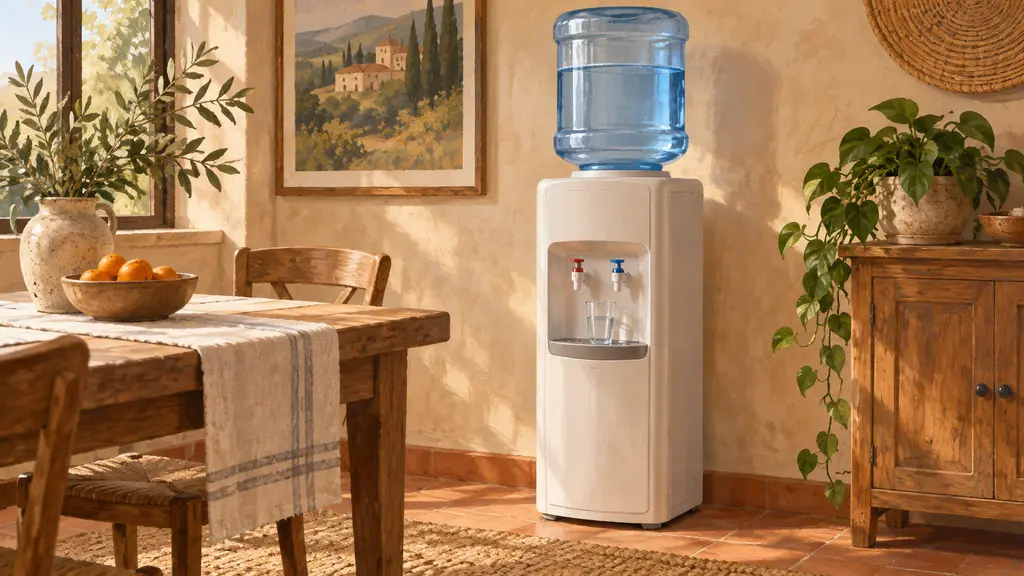
The number printed on a water dispenser (like 500W) isn’t its real draw over the course of a day, it’s the maximum possible draw. The heating element and the cooling unit cycle on and off under thermostat control, exactly like a refrigerator, so average daily consumption is far lower than the number on the label. What actually affects your bill isn’t the number of taps, it’s where the dispenser sits and how well it’s maintained.
The quick answer
A real water dispenser cycles on and off under thermostat control (like a fridge), so its actual consumption is much lower than the maximum figure printed on it. The heating element draws around 400 to 500 watts and the cooling unit around 70 to 100 watts, but neither runs continuously. What actually drives up consumption: where the dispenser sits (near sunlight or an oven) and scale buildup on the heating element. A bottle pump with no cooling or heating has nearly negligible consumption if electricity is your main concern.
Key takeaways
- A water dispenser works like a refrigerator: a thermostat cycles the heating and cooling on and off based on the target temperature, not continuous full-power operation (vapor-compression refrigeration background from Britannica).
- The normal (room-temperature) tap adds no extra electricity draw, since it’s just a direct water path with no heating or cooling behind it.
- Where the dispenser sits affects its consumption: placing it near direct sunlight or a heat source (an oven, for instance) makes the cooling unit work harder.
- Mineral scale reduces the heating element’s efficiency, gradually increasing run time over time.
- A bottle pump (rechargeable or USB) has nearly negligible consumption, since there’s no heating or cooling at all, just a small motor running for a few seconds per press.
Why the number on the dispenser isn’t its real consumption
A real water dispenser has two parts that draw power: a resistive heating element that typically draws around 400 to 500 watts, and a cooling unit (a small compressor or a thermoelectric module) that draws around 70 to 100 watts. The total figure printed on the unit’s label is the sum of the maximum draw of both combined, and that’s the number people see and assume is a constant, ongoing draw.
The reality is that an internal thermostat monitors the water temperature and runs the heating or cooling element for a short period until it reaches the target, then shuts it off until the temperature shifts again (either from water being drawn or from the surrounding room heating up). The result: the unit isn’t running at full power all day, it runs in cycles, exactly like a fridge or an AC unit shutting itself off once it hits the target temperature.
What actually drives up a water dispenser’s electricity use
- Where it’s placed: if it’s near a window with direct sunlight or next to an oven, the cooling unit has to work harder to offset the surrounding heat.
- Ventilation around the unit: if the dispenser is pushed against a wall or crammed into a tight corner with no airflow, the compressor takes longer to cool.
- Mineral scale: a buildup of scale on the heating element reduces its efficiency, so it needs longer to reach the target hot-water temperature, adding up over time.
- Heavy use of the hot tap: every time you draw hot water, the thermostat kicks the heating element back on to offset the new cold water that came in, so heavy hot-tap use means more cycles.
Comparison: dispenser types and their approximate bill impact
| Type | Heating element | Cooling unit | Approx. impact on your bill |
|---|---|---|---|
| Real 3-tap dispenser (hot, cold, normal) | Yes | Yes | Highest among the options, but runs in cycles, not continuously |
| Real 2-tap dispenser (hot and cold) | Yes | Yes | Close to the 3-tap model |
| Cold and normal dispenser (no heating) | No | Yes | Lower, since there’s no heating element |
| Bottle pump (rechargeable or USB) | No | No | Nearly negligible, only draws power while charging |
The real difference in your bill isn’t between a 2-tap and a 3-tap dispenser (the normal tap adds no draw), it’s between a dispenser with heating and cooling and a pump with neither.
Simple ways to cut consumption without giving up convenience
- Place the dispenser away from direct sunlight and heat sources like an oven or a hot kitchen, and leave ventilation space around the unit.
- Clean and sanitize the dispenser regularly (every month or two) to prevent mineral scale buildup that reduces the heating element’s efficiency. Full details are in our guide to cleaning a water dispenser.
- If the unit has a separate switch for the heating element, turn it off during times you won’t need hot water (overnight, for example) if that fits your household’s use.
- Don’t leave a tap dripping, since that makes the thermostat work harder to offset the constantly changing water.
If electricity is your main concern when buying
If daily consumption isn’t your top concern and you want a dispenser that settles the whole question, the Tornado 3-Tap Bottom-Loading dispenser was the example we used here: 3 taps with a comfortable bottom-load design and a 4.1 average from 77 ratings. Its consumption is roughly in line with any real 2-tap heating-and-cooling dispenser, and the real difference in your bill comes from placement and regular maintenance, not the number of taps. Its featured offer was unavailable when we re-checked on 23 August 2026, so for a unit you can actually buy start from our guide to the best water dispenser in Egypt.
The featured offer was unavailable at the last update.
Bottom line
A real water dispenser uses far less electricity than the maximum figure printed on it, because it cycles under thermostat control like a fridge. What actually affects your bill is where it’s placed and how well it’s maintained, not the number of taps. If you want the lowest possible consumption, a bottle pump with no cooling or heating is the fix. If you’re still deciding, see our guide to the best water dispenser in Egypt, or read is a water dispenser worth it? if you’re still weighing whether to buy one at all. To keep the unit running efficiently, read our guide to cleaning a water dispenser. To browse every option, see our water dispensers section.
Sources
- ENERGY STAR, “Water coolers”, general background on water dispensers and their design: https://www.energystar.gov/products/water_coolers
- Britannica, “Refrigeration”, background on the cooling principle behind a dispenser’s cooling unit: https://www.britannica.com/technology/refrigeration
This analysis is based on published information from ENERGY STAR (Water coolers), Britannica (Refrigeration).
Frequently asked questions
How many watts does a water dispenser actually draw?
The number printed on the unit (like 500W) is the maximum possible draw, not its continuous consumption. The heating element typically draws around 400 to 500 watts and the cooling unit around 70 to 100 watts, but both cycle on and off under thermostat control rather than running continuously at full power all day, exactly like a refrigerator.
Should I leave the water dispenser running all day or unplug it at night?
Leave it running, like any thermostat-controlled appliance (a refrigerator, for example). Unplugging and replugging it daily makes the unit draw extra energy to bring the water back to temperature from scratch, which is sometimes more than simply leaving it running. If you won't use it for an extended period (travel, for example), unplugging it then makes sense.
Does the number of taps affect electricity use?
The normal (room-temperature) tap has no cooling or heating behind it, so it adds no extra power draw, it's just a direct water path. The consumption comes only from the hot and cold taps, so a 3-tap dispenser isn't necessarily higher consumption than a 2-tap one if the only difference between them is the normal-temperature tap.
Does mineral scale increase a water dispenser's electricity use?
Yes. Scale buildup on the heating element makes it work harder to reach the same temperature, which gradually increases run time and energy use. Cleaning and sanitizing the dispenser regularly (every month or two) keeps it running efficiently.