
 UAE
UAE  Saudi Arabia
  USA
USA Why Does a Dehumidifier Smell? And How to Fix It
We may earn a commission from purchases through our links, at no extra cost to you. How we choose · Disclosure.
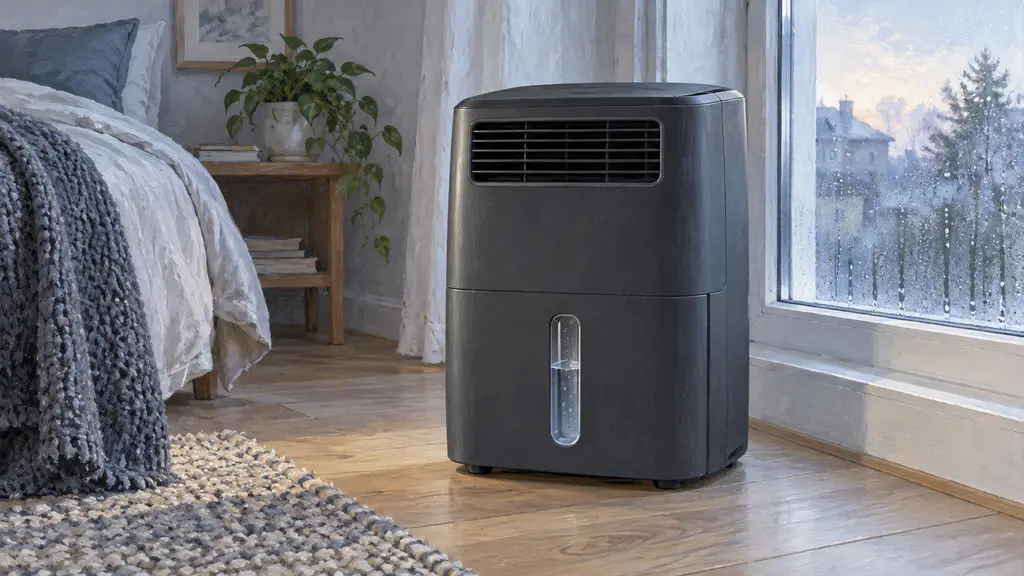
A musty or chemical smell coming from a dehumidifier is, in most cases, caused by standing water in the tank, a dirty filter, or moisture built up on the internal coils, not an actual fault in the unit. The first and most important fix is regular cleaning of the tank and filter, which solves the problem in most cases with no extra purchase needed.
The quick answer
A bad dehumidifier smell is mainly caused by standing water in the tank, a dirty filter, or moisture on the internal coils, not a fault in the unit. The first fix is cleaning: empty and wash the tank, clean the filter regularly, and let the unit air out after each use. If the smell persists after cleaning, some models accept a carbon filter add-on that helps absorb lingering odors, but it’s a complement to cleaning, not a substitute for it.
Key points
- The most common cause of the smell is standing water in the tank, especially if the unit was left without emptying it for a while.
- A dirty filter collects dust and moisture together, which is the ideal environment for the mold growth that causes the smell (background on mold growth from US EPA).
- Regular cleaning fixes the problem in most cases, with no need for any extra purchase.
- Some models accept a carbon filter as an add-on that helps absorb lingering odors, but it’s a complement, not a substitute for cleaning.
- The smell isn’t a flaw in the unit itself, it’s a natural result of built-up moisture and dust, like any appliance that circulates water and air inside it.
The real cause behind the smell
A dehumidifier, by design, pulls in humid air and continuously collects water inside it (dehumidifier definition from ENERGY STAR), which makes it an ideal environment for mold and bacteria to grow if it isn’t cleaned regularly. The most common causes of the smell:
- Standing water in the tank for a long stretch, especially if the unit was switched off with water still inside it.
- A dirty air filter with dust built up alongside moisture, an ideal combination for mold growth.
- Moisture built up on the internal coils if the unit runs in a closed room without enough ventilation.
- A faint chemical smell on first use is normal in some new units and fades with time, but if it persists and turns into a musty smell, the cause is moisture buildup, not the unit itself.
Common causes and quick fixes
| Cause | Sign | Fix |
|---|---|---|
| Standing water in the tank | Musty or damp smell, especially after a period of disuse | Empty, wash, and dry the tank regularly |
| Dirty filter with dust and moisture | Smell gets worse the more the unit runs | Wash or tap the filter clean per the manual |
| Moisture on the internal coils | A faint damp smell even with a clean tank | Wipe visible moisture and improve ventilation |
| Chemical smell on first use | A faint plastic smell that fades over time | Usually normal, keep an eye on it if it persists |
The fix: cleaning steps in order
- Unplug the unit before any cleaning step.
- Empty the tank and wash it with warm water and mild soap, rinse well, and let it dry fully before reinstalling it.
- Remove the air filter and wash or tap it clean per your model’s instructions, let it dry fully before putting it back, and if the filter is old or torn, it’s time to replace it.
- Wipe visible moisture on the coils with a dry or lightly damp cloth from the outside, without opening up the unit’s internals yourself.
- Let the unit air out in a well-ventilated room instead of leaving it wedged into a fully closed corner all the time.
- Repeat this cleaning on a regular schedule (weekly, or per your model’s manual), not only once the smell shows up.
This cleaning routine fixes the problem in the vast majority of cases, with no need to buy anything extra for it.
What if the smell persists after cleaning?
If you’ve cleaned the unit properly and a faint smell still lingers, there’s a practical add-on that can help: some dehumidifier models accept an activated carbon filter that fits over or beside the main filter, whose job is to absorb lingering odors from the air rather than treat their source. This add-on complements cleaning, it doesn’t replace it, meaning if your tank or filter is already dirty, an extra filter won’t fix the root problem. Check your model’s manual first to see if it supports an add-on like this before considering buying anything, and if the smell is strong and persists despite regular cleaning, that’s a sign it may be time for a new unit.
A working example from our picks
If you’ve decided your current unit genuinely needs replacing, the Smart Compressor Dehumidifier at 30L/day from our picks carries a large drying capacity and app control, and it’s the most-reviewed model among all our picks, with thousands of positive reviews on Amazon.eg. Regular cleaning with the same steps above will make just as much difference to its lifespan and smell as any other unit. Full details and its current price are in our guide to the best dehumidifier in Egypt.
See the Smart Compressor Dehumidifier 30L price on Amazon.eg ↗
When to stop and call a technician
- A strong musty or moldy smell persists after the tank, filter, and vents are cleaned and dried.
- The smell returns quickly after each complete cleaning.
- Moisture remains on the coils after the unit has been cleaned and aired out.
- Airflow or moisture removal stays weak after the filter is cleaned.
Stop using the dehumidifier and have it checked by a qualified technician before using it again.
Bottom line
A bad dehumidifier smell is, in most cases, caused by standing water in the tank, a dirty filter, or moisture built up on the internal coils, not an actual fault. Regular cleaning (tank, filter, ventilation) fixes it in the vast majority of cases with no extra purchase needed, and a carbon filter, if your model supports one, is a helpful add-on, not a primary fix. If you want to understand how the unit works in the first place to see where that moisture comes from, read how does a dehumidifier work?, and if you keep confusing it with a humidifier, see dehumidifier vs humidifier. If your old unit genuinely needs replacing, head back to our guide to the best dehumidifier in Egypt or our guide on how to choose a dehumidifier, and browse our dehumidifiers section for every option.
Sources
- ENERGY STAR, “Dehumidifiers”, definition of the dehumidifier and its internal parts like the tank, filter, and coils: https://www.energystar.gov/products/dehumidifiers
- US EPA, “Mold, moisture and your home”, background on mold growth in enclosed, humid environments: https://www.epa.gov/mold/brief-guide-mold-moisture-and-your-home
This analysis is based on published information from ENERGY STAR (Dehumidifiers), US EPA (Mold, moisture and your home).
Frequently asked questions
Does the smell mean my dehumidifier is broken?
No, in most cases. A bad smell is usually caused by standing water in the tank, a dirty filter, or moisture built up on the internal coils, not an actual fault in the motor or compressor. Regular cleaning fixes it in the vast majority of cases.
How exactly do I clean the unit once the smell starts?
Unplug it, empty the tank and wash it with warm water and mild soap, rinse well and let it dry fully, remove the air filter and wash or tap it clean per your model's manual, wipe any visible moisture on the coils from the outside with a cloth, and let the unit air out somewhere well ventilated. Do this on a regular schedule, not just once the smell starts.
Can I use a carbon filter with the unit to fix the smell?
Some dehumidifier models accept an activated carbon filter as an add-on that helps absorb lingering odors from the air. It's a useful complement after cleaning, not a substitute for it, so check your model's manual to see if it supports one, and if your tank or filter is already dirty, clean those first before considering any add-on.
How do I prevent dehumidifier smell in the first place?
Don't leave standing water in the tank if you won't use the unit for a while, empty, clean, and dry the tank before storing it, clean the filter regularly per your model's manual, and leave enough space around the unit for airflow instead of running it wedged into a fully closed corner.